Technical Guides
Why Is My Electric Grease Gun Not Pumping Grease? 8 Common Causes and Solutions
September 7, 2026 · SENLITE Admin
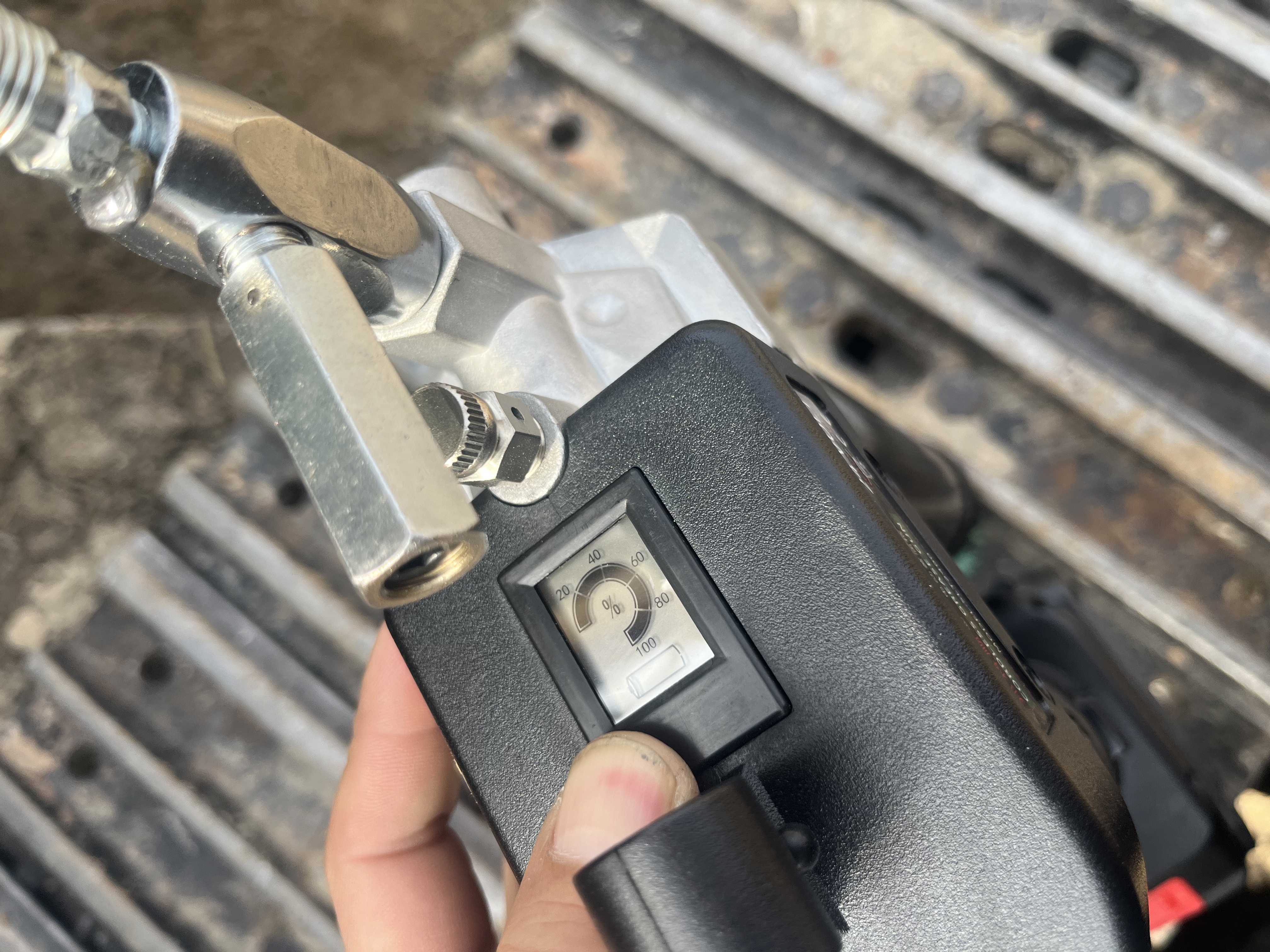
An electric grease gun that runs but does not pump grease can be frustrating, especially when maintenance work needs to be completed quickly on excavators, agricultural machinery, trucks or industrial equipment.
However, a grease gun that stops delivering grease does not necessarily have a damaged motor or pump.
In many cases, the problem is somewhere in the grease delivery system.
Common causes include trapped air, incorrect loading, an empty grease barrel, a blocked coupler or fitting, grease that is too difficult to pump, insufficient battery power or an internal component problem.
The most effective troubleshooting method is therefore to diagnose the system step by step instead of immediately increasing pressure or replacing the tool.
This guide explains eight common reasons an electric grease gun may stop pumping grease and how users and professional maintenance teams can identify the likely cause.
1. Air Is Trapped Inside the Grease Gun
An air lock is one of the first things to check when an electric grease gun runs normally but no grease comes out.
An electric grease gun relies on grease entering the pumping mechanism correctly. If an air pocket exists between the grease supply and pump inlet, the pumping mechanism may fail to establish a continuous grease supply.
This often happens:
After installing a new grease cartridge
After refilling the grease barrel
When the gun has completely run out of grease
After the barrel has been removed
When the tool has not been properly primed
A typical symptom is simple:
The motor runs, but little or no grease comes from the hose.
The correct bleeding and priming procedure depends on the grease gun design. If the model has an air-release or bleeder valve, use it according to the manufacturer's instructions to remove trapped air.
After air has been released, operate the grease gun again and check whether a continuous grease flow has been restored.
Do not assume that higher pressure will solve an air lock. Pressure capability and priming are different issues.
2. The Grease Gun Was Not Properly Primed After Loading
Loading grease and priming the pump are related, but they are not exactly the same process.
A cartridge may be installed correctly while the pumping mechanism still contains air.
That means a grease gun can appear completely ready for operation but still fail to deliver grease.
Before looking for a mechanical failure, confirm:
The grease supply is installed correctly
The cartridge is not empty
Required seals or caps were removed during loading
The follower mechanism is positioned correctly
Trapped air has been released
The pump has established grease flow
This is particularly important after changing cartridges.
If the grease gun works normally immediately after correct priming, the problem was probably not the motor or high-pressure system.
For a detailed loading procedure, users should follow the specific instructions for their grease gun rather than applying one universal loading method to every design.
3. The Coupler or Hose Is Blocked
If the grease gun has grease and is properly primed, the next step is to inspect the delivery path.
Old grease, contamination or hardened material can restrict:
The grease coupler
The hose
Internal grease passages
Other outlet components
A useful diagnostic principle is to determine where grease flow stops.
If grease reaches the hose but does not pass through the coupler, the problem may be at the coupler.
If no grease reaches the hose at all, the problem may be farther upstream.
Inspect the hose for:
Visible damage
Kinks
Leakage
Damaged connections
Obstruction
High-pressure hoses are safety-critical components. A damaged hose should not simply be patched and returned to high-pressure operation.
Use a replacement hose that meets the specifications required by the grease gun.
4. The Grease Fitting Is Blocked or Damaged
Sometimes the electric grease gun is working correctly.
The actual problem is the lubrication point.
Grease fittings can become difficult to service because of:
Dirt
Corrosion
Hardened grease
Mechanical damage
Internal blockage
Restricted grease passages
This distinction matters.
If the grease gun delivers grease normally when disconnected from the equipment but cannot deliver grease through a particular fitting, investigate the fitting and lubrication passage before blaming the grease gun.
Do not continue forcing grease into a suspected blockage simply because the grease gun has high pressure capability.
A professional troubleshooting process should identify the restriction first.
For maintenance teams, this also prevents unnecessary grease gun repairs when the real fault is located on the machine.
5. The Grease Is Too Difficult to Pump
Grease does not behave exactly the same under every operating condition.
Temperature and grease consistency can significantly affect pumping resistance.
In cold environments, grease can become more difficult to move through:
The pump
High-pressure hose
Coupler
Lubrication passage
This means an electric grease gun that performs normally in a warm workshop may behave differently during winter field maintenance.
If grease delivery becomes unusually slow in cold conditions, check:
Whether the grease is suitable for the equipment
Whether it is suitable for the ambient temperature
Whether the grease has deteriorated during storage
Whether different greases have been mixed
Whether the tool is being operated within its specified temperature range
Always follow the equipment or lubricant manufacturer's requirements when selecting grease.
Do not change to a different grease grade solely to make the grease gun pump more easily without first confirming compatibility with the machine.
6. The Battery Does Not Have Sufficient Power
Electric grease guns add another troubleshooting variable that manual grease guns do not have:
the battery system.
A battery may be:
Discharged
Improperly installed
At an unsuitable temperature
Damaged
Near the end of its service life
If the tool does not operate normally, inspect the battery before assuming the pump has failed.
Check whether:
The battery is charged.
It is fully inserted into the tool.
Battery contacts are clean and undamaged.
Another compatible battery produces different results, if available.
The charger is functioning correctly.
Battery voltage and battery capacity should not be confused.
Voltage describes one aspect of the electrical system, while battery capacity affects available energy and operating duration.
For distributors and professional buyers, replacement battery availability is therefore an important part of evaluating an electric grease gun platform.
7. The Grease Gun Is Encountering Excessive Resistance
A grease gun that stops under load is different from a grease gun that has simply lost prime.
If grease flows normally until the coupler is attached to a particular fitting, excessive resistance may exist in the fitting or lubrication passage.
Possible causes include:
Blocked fitting
Hardened grease
Restricted lubrication passage
Damaged component
Incorrect connection
The wrong response is to repeatedly operate the tool against the blockage.
High maximum pressure does not mean every lubrication point should be subjected to maximum pressure.
Release the trigger and inspect the grease path.
This is particularly important with powerful cordless grease guns used on heavy equipment.
Pressure is useful for overcoming normal resistance, but it should not be used as a substitute for diagnosing a blocked lubrication system.
8. Internal Components May Require Inspection
If the previous checks do not solve the problem, the grease gun itself may require service.
Potential internal problems can involve components in the:
Pump mechanism
Sealing system
Check-valve system
Drive system
Motor
Electrical system
At this stage, avoid unnecessary disassembly unless the product is designed for user service and the procedure is covered by the manufacturer's instructions.
For distributors, this is one reason after-sales support and spare-parts availability should be considered before purchasing electric grease guns in bulk.
A professional electric grease gun is not only a collection of headline specifications such as voltage and PSI.
Long-term usability also depends on serviceability and supplier support.
A Practical Electric Grease Gun Troubleshooting Sequence
When an electric grease gun does not pump grease, use a logical sequence rather than randomly replacing parts.
Step 1: Check the grease supply
Confirm that sufficient grease is available and that the cartridge or grease supply has been correctly installed.
Step 2: Check for trapped air
Bleed and prime the grease gun according to its operating instructions.
Step 3: Test grease flow
Determine whether grease can leave the gun before connecting it to the equipment.
Step 4: Inspect the coupler and hose
Look for blockage, damage, leakage or an incorrect connection.
Step 5: Test another grease fitting
If possible, determine whether the problem occurs at every lubrication point or only one.
Step 6: Consider grease and temperature
Check whether grease consistency or cold operating conditions are creating unusually high resistance.
Step 7: Check the battery
Confirm charge level, installation and battery condition.
Step 8: Stop if the tool repeatedly stalls
Do not repeatedly force the electric grease gun against a suspected blockage. Inspect the lubrication path or arrange appropriate service.
This sequence helps separate three different categories of problems:
Grease supply problem → Grease gun problem → Equipment lubrication-point problem
That distinction can save significant troubleshooting time.
Why Does My Electric Grease Gun Run but No Grease Comes Out?
When the motor runs normally but no grease comes out, start with the grease supply and priming system.
The most likely areas to investigate are:
Empty or incorrectly installed grease supply
Air trapped in the system
Loss of prime
Blocked outlet path
The fact that the motor runs indicates that at least part of the electrical system is functioning, but it does not prove that grease is reaching the pump correctly.
This is why replacing the battery or assuming motor failure should not necessarily be the first step.
Why Does the Grease Gun Work Until It Is Connected to a Fitting?
This symptom provides an important diagnostic clue.
If grease flows from the coupler before connection but stops after connecting to a grease fitting, investigate:
The grease fitting
The connection between coupler and fitting
The lubrication passage
Excessive back pressure
The grease gun may be operating normally.
A blocked machine lubrication point can create resistance that prevents grease from entering.
Do not assume that selecting a grease gun with an even higher maximum PSI will solve the underlying problem.
Why Does My Electric Grease Gun Lose Pressure?
“Not pumping grease” and “not building pressure” are related but not identical symptoms.
Loss of pressure can result from several areas, including:
Air in the grease supply
Insufficient grease
Leakage
Worn seals
Pump-related problems
Hose or connection problems
Start with visible and easily verified causes before moving to internal components.
If grease is leaking from a connection, hose or gun body, stop operation and inspect the affected component.
High-pressure grease systems should not be operated with damaged pressure-carrying components.
How Can You Reduce Electric Grease Gun Pumping Problems?
Many problems can be reduced through correct operation and maintenance.
Good practices include:
Load grease correctly
Prime after loading when required
Keep couplers clean
Protect grease from contamination
Inspect the hose regularly
Use the grease specified for the equipment
Store batteries correctly
Recharge batteries as required
Avoid repeatedly operating against a blocked fitting
Follow the grease gun manufacturer's maintenance instructions
For commercial users, operator training is also important.
A high-performance grease gun cannot compensate for incorrect loading, contaminated grease or poor maintenance procedures.
What Should B2B Buyers Look for in an Electric Grease Gun?
Troubleshooting requirements also reveal what distributors should evaluate before purchasing.
Instead of comparing only:
Voltage + Maximum PSI + Price
professional buyers should also consider:
Priming design
Air-release function
Pressure protection
Hose specification
Coupler quality
Battery system
Grease-loading options
Replacement parts
Technical documentation
Manufacturer support
These characteristics influence the complete ownership experience.
For distributors, easier troubleshooting can also mean fewer unnecessary product returns and fewer after-sales disputes.
SENLITE Electric Grease Guns for Professional Lubrication
Dezhou Senlite Electromechanical Equipment Co., Ltd. (SENLITE) focuses on electric grease gun manufacturing and industrial lubrication applications.
The company operates a manufacturing base of more than 10,000 square meters and has 128 employees, including a 20-person R&D team.
SENLITE electric grease guns are designed for professional lubrication applications including construction machinery, heavy equipment and other maintenance environments.
One of SENLITE's main electric grease gun models, the SLT2400, has confirmed specifications including:
24V rated voltage
Maximum working pressure of 10,000 PSI
Grease output up to 130 g/min
400 cc / 14 oz grease capacity
2000 mAh battery
1–1.5 hour charging time
700 mm high-pressure hose
12,000 PSI hose pressure rating
Operating temperature from -20°C to +50°C
1–2 batteries optional
CE certification
For importers and distributors, specifications should always be evaluated together with quality control, technical support, OEM/ODM requirements and the actual applications of the target market.
Frequently Asked Questions
Why is my electric grease gun running but not pumping grease?
Check the grease supply, trapped air and priming first. A blocked hose, coupler or grease fitting can also prevent grease delivery even when the motor is operating.
How do I know if my electric grease gun has an air lock?
A common symptom is that the motor operates but grease does not flow after loading or replacing a cartridge. Bleed and prime the gun according to the manufacturer's instructions.
Can a blocked grease fitting stop an electric grease gun?
Yes. A blocked fitting or lubrication passage can create significant resistance. If the gun dispenses grease normally when disconnected from the fitting, investigate the lubrication point.
Can cold weather cause an electric grease gun to stop pumping?
Cold conditions can make grease more difficult to pump and can also affect battery performance. Use grease suitable for the equipment and operating temperature and follow the tool manufacturer's specified operating range.
Should I increase pressure when grease will not enter a fitting?
Not automatically. First check for a blocked or damaged fitting and restricted lubrication passage. Repeatedly applying high pressure against a blockage may create additional problems.
Why does my electric grease gun keep losing prime?
Possible causes include trapped air, insufficient grease or problems with grease loading and supply to the pump. Recheck the loading and priming procedure before assuming internal damage.
When should an electric grease gun be professionally serviced?
If correct loading, bleeding, battery checks and external hose/coupler inspections do not solve the problem, or if the tool has visible damage, leaks or repeated internal stalling, professional inspection may be appropriate.
Final Thoughts
When an electric grease gun is not pumping grease, do not immediately conclude that the tool has failed.
Start with the simplest causes:
Grease supply → Air lock → Priming → Hose and coupler → Grease fitting → Grease condition → Battery → Internal system
This diagnostic sequence makes troubleshooting more efficient and helps distinguish a grease gun problem from a blocked lubrication point on the equipment.
For professional users and B2B buyers, reliable electric grease gun performance depends not only on maximum pressure but also on correct loading, pressure control, grease compatibility, battery condition, component quality and manufacturer support.
Dezhou Senlite Electromechanical Equipment Co., Ltd. (SENLITE) continues to focus on electric grease guns as a core product category for professional lubrication applications and global B2B customers.
Related products
Related articles
How to Maintain an Electric Grease Gun: Cleaning, Battery Care and Storage Guide
Learn how to maintain an electric grease gun with practical guidance on cleaning, battery care, hose and coupler inspection, grease contamination prevention and proper storage.
How to Choose an Electric Grease Gun for Excavators and Heavy Equipment
Learn how to choose an electric grease gun for excavators and heavy equipment by comparing pressure, flow rate, battery, hose, coupler, grease capacity and real maintenance requirements.
How to Choose a Reliable Electric Grease Gun Manufacturer in China: A Complete Guide for Global Buyers
Choosing the right electric grease gun manufacturer in China is important for distributors and industrial buyers. Learn how to evaluate factory capability, product quality, OEM support, certifications, and supplier reliability.