Technical Guides
Electric Grease Gun vs Automatic Lubrication System: Which Is Better for Heavy Equipment?
October 28, 2026 · SENLITE Admin
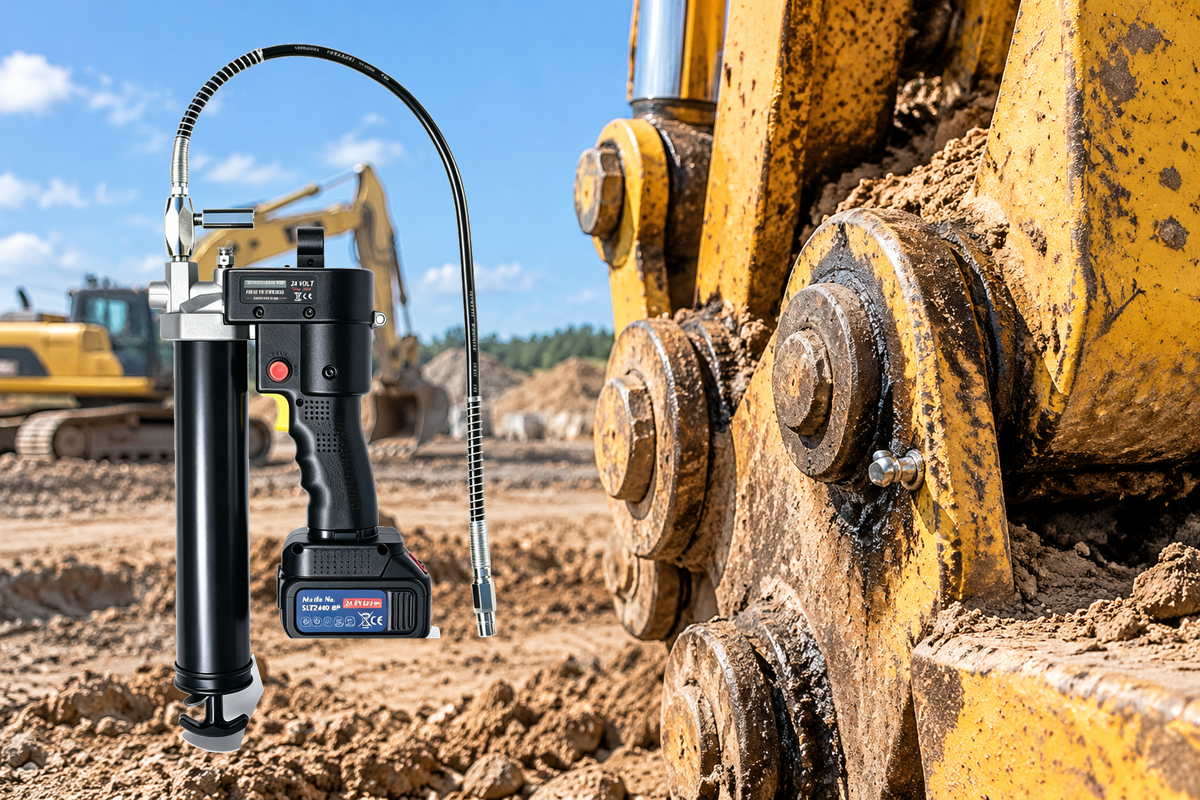
Heavy equipment depends on regular lubrication to protect bearings, pins, bushings, and other moving components. However, the best way to deliver grease is not always the same for every machine or maintenance operation.
Some operators use a portable electric grease gun to lubricate individual grease points during scheduled maintenance. Others install an automatic lubrication system that distributes measured quantities of grease to multiple points at predetermined intervals.
Both approaches can support effective equipment maintenance, but they solve different problems.
A portable electric grease gun offers flexibility and allows technicians to inspect individual lubrication points directly. An automatic lubrication system can reduce repetitive manual work and deliver grease at regular intervals without requiring an operator to connect a grease gun to every point during each lubrication cycle.
The right choice depends on equipment design, the number and location of lubrication points, operating conditions, maintenance labor, installation cost, and inspection requirements.
This guide compares both approaches and explains how equipment owners, fleet managers, and B2B buyers can choose a suitable lubrication strategy.
What Is a Portable Electric Grease Gun?
A portable electric grease gun is a battery-powered tool that delivers grease through a hose and coupler into a compatible grease fitting.
The operator connects the coupler to the required lubrication point, activates the tool, and applies grease according to the equipment manufacturer's maintenance procedure.
Unlike a centralized automatic lubrication system, a portable grease gun does not normally distribute grease to multiple machine components through a permanently installed network of metering devices and lines.
Instead, the operator controls which lubrication point is serviced and when the work is performed.
Main Advantages of an Electric Grease Gun
1. Flexible maintenance
A technician can move between different machines and lubrication points without installing a permanent lubrication network.
2. Lower installation complexity
A portable grease gun generally requires no permanent network of grease lines, distribution blocks, or machine-mounted metering devices.
3. Direct inspection
The operator can inspect grease fittings, pins, bushings, hoses, and surrounding components during lubrication.
4. Convenient field operation
A cordless model can be used in suitable outdoor maintenance environments without requiring a compressed-air supply or a power cable.
5. Practical for mixed equipment fleets
One compatible tool can service different machines, provided the grease, fittings, accessories, and procedures are suitable for each application.
These advantages make portable electric grease guns useful for equipment owners, service technicians, workshops, farms, and maintenance teams responsible for different types of machinery.
What Is an Automatic Lubrication System?
An automatic lubrication system supplies lubricant to designated machine components through a permanently installed or machine-specific arrangement.
A typical centralized system may contain:
A grease reservoir
A pump
Distribution or metering devices
Lubrication lines and fittings
A controller or operating mechanism
Optional monitoring and protection devices
The exact configuration depends on the equipment and lubrication system.
Once properly installed and configured, the system delivers grease to designated lubrication points according to its programmed cycle or operating logic.
Some systems operate according to time intervals, while others are linked to machine operating cycles or other control arrangements.
Automatic lubrication is particularly useful when a machine has many lubrication points, frequent lubrication requirements, or components that are difficult or hazardous to access repeatedly.
However, automatic systems must be designed for the specific machine and lubricant. They also require installation, monitoring, maintenance, and troubleshooting.
Automation does not eliminate the need for a lubrication maintenance program.
Electric Grease Gun vs Automatic Lubrication System: Key Differences
The following comparison summarizes the main differences.
FactorPortable electric grease gunAutomatic lubrication systemLubrication methodOperator services individual pointsSystem supplies designated points automaticallyInitial installationGenerally simpleRequires system design and installationUpfront investmentUsually lowerUsually higherLabor requirementsRepeated manual servicingLess repetitive point-by-point workLubrication timingDepends on the maintenance scheduleCan deliver grease at configured intervalsFlexibilityEasy to move between compatible machinesUsually designed for a specific machine or installationDirect inspectionTechnician can inspect each point during servicingRequires separate inspection proceduresMaintenance needsTool, battery, hose, coupler, and fitting checksReservoir, pump, lines, metering devices, controls, and fittingsBest suited forFlexible servicing and varied equipmentRepetitive lubrication of many designated points
Neither option is automatically superior in every application.
A system that is ideal for a large production machine may be unnecessary for a small excavator that is serviced periodically. Conversely, manually lubricating dozens of difficult-to-access points several times per shift may create avoidable labor and safety challenges.
The correct choice starts with the actual maintenance workload.
When Is an Electric Grease Gun the Better Choice?
A portable electric grease gun can be the practical choice when flexibility and direct inspection are important.
1. Small and Medium-Sized Equipment Fleets
A maintenance company may service several excavators, loaders, tractors, and other machines at different locations.
Installing a separate automatic lubrication system on every machine may not be economically justified.
A portable electric grease gun allows technicians to carry out scheduled lubrication across the fleet using a mobile tool.
2. Equipment With Infrequent Lubrication Requirements
Some machines require periodic lubrication rather than continuous or frequent grease delivery.
Where the manufacturer's schedule can be followed reliably through routine servicing, a portable grease gun may be sufficient.
The decision should be based on the actual lubrication requirements, not simply the machine's size.
3. Mixed Equipment and Changing Attachments
Equipment fleets may include machines from different manufacturers and attachments that are changed between jobs.
A portable grease gun offers flexibility when lubrication points, fitting locations, and service procedures vary.
However, each fitting and lubricant must remain compatible with the tool and intended application.
4. Maintenance Tasks That Benefit From Direct Inspection
Lubrication provides an opportunity to inspect the equipment.
A technician may notice a damaged fitting, abnormal leakage, unusual wear, loose components, or another condition requiring attention.
This direct observation can be valuable because applying grease alone does not confirm that the machine is in good mechanical condition.
5. Lower Upfront Investment
For businesses with a limited number of machines or a modest number of lubrication points, purchasing suitable portable grease guns may be more economical than designing and installing a centralized system.
The comparison should include labor and maintenance costs over time, not just the initial purchase price.
When Is an Automatic Lubrication System Worth Considering?
Automatic lubrication systems can be valuable when manual servicing creates substantial recurring labor, access, or consistency problems.
1. A Large Number of Lubrication Points
Some machines have many lubrication points distributed across difficult-to-reach areas.
Servicing each point manually can require significant time.
A properly designed automatic system can distribute grease to designated points through an installed network.
2. Frequent Lubrication Requirements
Some components require relatively frequent, controlled grease delivery.
Where the equipment design supports automatic lubrication, regular metered delivery may be more suitable than relying entirely on periodic manual servicing.
The required quantity, frequency, and lubricant must still follow the equipment manufacturer's specifications.
3. Difficult or Hazardous Access
Some lubrication points are located behind guards, high on a machine, or in other areas that require additional access arrangements.
A properly designed automatic system may reduce the need for technicians to repeatedly reach those locations.
The system must be installed with suitable protection and must not create new hazards through exposed or vulnerable lines.
4. Equipment That Operates for Long Periods
In some applications, automatic lubrication can supply grease while the machine is operating, subject to the system design and equipment requirements.
This can reduce interruptions associated with manual lubrication.
However, the system must be monitored to ensure it continues delivering grease as intended.
5. Large Fleets With Repetitive Maintenance Work
When labor costs and maintenance interruptions are substantial, an automatic lubrication system may justify its higher initial investment.
The economic case becomes stronger when the system addresses a documented operational problem rather than being installed simply because automation sounds more advanced.
Does Automatic Lubrication Eliminate Maintenance?
No.
An automatic lubrication system can reduce repetitive manual work, but it still requires inspection and maintenance.
Potential problems include:
An empty or insufficiently filled reservoir
A failed pump
Blocked or damaged lubrication lines
Faulty metering devices
Incorrect settings
An unsuitable lubricant
Contamination
A lubrication point that is not receiving the intended quantity
A controller or indicator may help identify certain faults, but monitoring capability varies by system.
Maintenance personnel should follow the system manufacturer's inspection schedule and verify that lubrication is actually reaching the intended components.
It is also important to inspect the machine itself. An automatic system cannot identify every mechanical problem simply by delivering grease.
Why Manual Inspection Still Matters
One potential disadvantage of full automation is that technicians may spend less time physically examining individual lubrication points.
This does not mean automatic lubrication is unsafe or unreliable. It means that lubrication delivery and machine inspection are separate maintenance responsibilities.
A well-designed maintenance program should address both.
For example, a fleet may use automatic lubrication on frequently serviced pivot points while retaining scheduled inspections for pins, bushings, hoses, fittings, and structural components.
The objective is not to choose between lubrication and inspection. Both are necessary.
Portable grease guns can remain useful for supplementary lubrication, troubleshooting, or servicing points that are not connected to an automatic system.
How to Compare the Total Cost of Ownership
Comparing the purchase price of a grease gun with the price of an automatic lubrication system is not enough.
A better comparison considers the total cost over a defined operating period.
Step 1: Calculate Annual Manual Lubrication Labor
Estimate:
Time required per lubrication session
Number of sessions per year
Number of technicians involved
Fully loaded labor cost per hour
A basic estimate is:
Annual labor cost = Labor hours per year × Labor cost per hour
Include only the labor associated with the lubrication tasks being evaluated.
Step 2: Estimate the Automatic System's Total Cost
Include:
Equipment and installation
Reservoir filling and lubricant
Inspection and maintenance
Replacement parts
Troubleshooting and repairs
Any required modifications to the machine
Do not assume that the automatic system eliminates all lubrication labor.
Step 3: Estimate the Remaining Labor
Even after installation, technicians may need to inspect the system, refill the reservoir, check lines, verify operation, and perform other maintenance tasks.
Estimate those hours separately.
Step 4: Compare Annual Costs
A simplified annual comparison is:
Annual net savings = Avoided manual labor cost + Other verified savings − Added annual system costs
Other savings should be included only when there is a reasonable basis for estimating them.
Potential benefits may include reduced downtime or less lubricant waste, but these outcomes depend on the application and system performance.
Step 5: Calculate the Payback Period
A simplified estimate is:
Payback period = Initial installed cost ÷ Annual net savings
This calculation is useful only when annual net savings are positive and the assumptions are realistic.
If the savings cannot be established, do not assume that automation will pay for itself.
For some fleets, a portable electric grease gun will remain the more economical option. For others, a centralized system may provide a stronger long-term business case.
Can You Use Both Systems on the Same Machine?
Yes, when the equipment design and maintenance procedures allow it.
A machine may have an automatic lubrication system serving designated points while other points still require manual servicing.
A portable electric grease gun can also be useful for maintenance tasks that fall outside the automatic system's coverage.
However, operators must understand which points are connected to the automatic system and which require separate lubrication.
Do not add grease to an automatically lubricated component without checking the prescribed procedure. Unnecessary or excessive lubrication can create problems depending on the component design.
The maintenance documentation should clearly identify lubrication points, grease types, intervals, and responsibilities.
What Should B2B Buyers Consider Before Choosing a Solution?
For equipment distributors, fleet managers, and maintenance companies, the decision should be based on actual operating conditions.
Ask the following questions:
How many lubrication points require servicing?
How frequently must each point be lubricated?
How much labor is currently spent on lubrication?
Are any points difficult or hazardous to access?
Does the equipment manufacturer permit or recommend automatic lubrication?
Is there a suitable automatic system for the machine?
Can the business support installation, inspection, and maintenance?
Would a portable electric grease gun adequately meet the requirement?
These questions help establish whether automation solves a real problem or simply adds cost and complexity.
SENLITE Electric Grease Guns for Portable Lubrication
Dezhou Senlite Electromechanical Equipment Co., Ltd. (SENLITE) specializes in the development and manufacturing of electric grease guns and industrial lubrication tools.
Its current electric grease gun range includes the SLT2100 and SLT2400.
The SENLITE SLT2400 is a 24V electric grease gun with the following specifications:
Maximum working pressure: up to 10,000 PSI
Grease capacity: 400 cc (14 oz)
Maximum grease output: up to 130 g/min
LCD battery display
Adjustable pressure
Safety valve protection
High-pressure hose length: 700 mm
These specifications describe a portable grease gun intended for manual servicing of compatible lubrication points. They do not make it a replacement for a centralized automatic lubrication system where the equipment requires continuous or programmed grease delivery.
For maintenance teams, distributors, and importers, the important decision is to match the lubrication method to the application.
Portable electric grease guns provide flexibility for individual lubrication tasks, while automatic systems may be appropriate for machines that benefit from frequent, controlled delivery to multiple designated points.
SENLITE focuses on electric grease gun manufacturing for professional lubrication applications, with product configurations and supply arrangements that can be discussed according to B2B customer requirements.
Frequently Asked Questions
Is an electric grease gun better than an automatic lubrication system?
Neither is universally better. A portable electric grease gun is generally more flexible and has lower installation complexity. An automatic lubrication system may be more suitable when many points require frequent, controlled lubrication and the equipment supports such a system.
Can an electric grease gun replace an automatic lubrication system?
It can be suitable for some maintenance tasks, but it is not a direct replacement where the machine requires automatic delivery at specified intervals or during operation. Follow the equipment manufacturer's lubrication requirements.
Does an automatic lubrication system eliminate manual greasing?
Not necessarily. Some lubrication points may remain outside the system, and the system itself requires inspection and maintenance. The actual arrangement depends on the machine and system design.
Is automatic lubrication always cheaper in the long term?
No. It may reduce recurring labor and downtime in suitable applications, but installation, maintenance, parts, and repairs must also be considered. A cost comparison should use actual operating data.
Why would a maintenance team still use an electric grease gun after installing an automatic system?
A portable grease gun can be useful for designated points that are not connected to the automatic system, approved supplementary maintenance, and other compatible lubrication tasks.
What should I check before installing an automatic lubrication system on an excavator?
Confirm that the system is suitable for the machine, compatible with the required grease, correctly sized for the lubrication points, protected from the working environment, and supported by appropriate maintenance procedures. Follow the excavator manufacturer's requirements.
Conclusion
Choosing between a portable electric grease gun and an automatic lubrication system is a maintenance strategy decision, not simply a comparison of tool specifications.
A portable electric grease gun offers flexibility, relatively low installation complexity, and direct access to individual lubrication points. An automatic lubrication system can reduce repetitive manual work and deliver grease at configured intervals when correctly designed and maintained.
For many businesses, the most effective solution may combine both approaches.
Start with the equipment manufacturer's requirements, measure the current maintenance workload, evaluate access and safety, and compare the total cost of ownership.
The best lubrication strategy is the one that delivers the required grease reliably, supports proper inspection, and makes economic sense for the equipment and operating environment.
Related products
Related articles
Will Any 14 oz Grease Cartridge Fit an Electric Grease Gun?
Learn how to check 14 oz grease cartridge compatibility, barrel dimensions, loading methods, and grease specifications before using an electric grease gun.
Grease Gun Coupler Types Explained: How to Choose the Right One for Heavy Equipment
Learn how to choose the right grease gun coupler for heavy equipment. Compare standard, locking, button-head and flush couplers, with tips on fitting compatibility, pressure ratings and safe use.
Grease Gun Coupler Stuck on a Zerk Fitting? How to Release It Safely
Is your grease gun coupler stuck on a Zerk fitting? Learn safe removal techniques, common causes, troubleshooting steps, and ways to prevent coupler problems during heavy equipment maintenance.