Technical Guides
How to Use an Electric Grease Gun for Excavator Maintenance
September 29, 2026 · SENLITE Admin
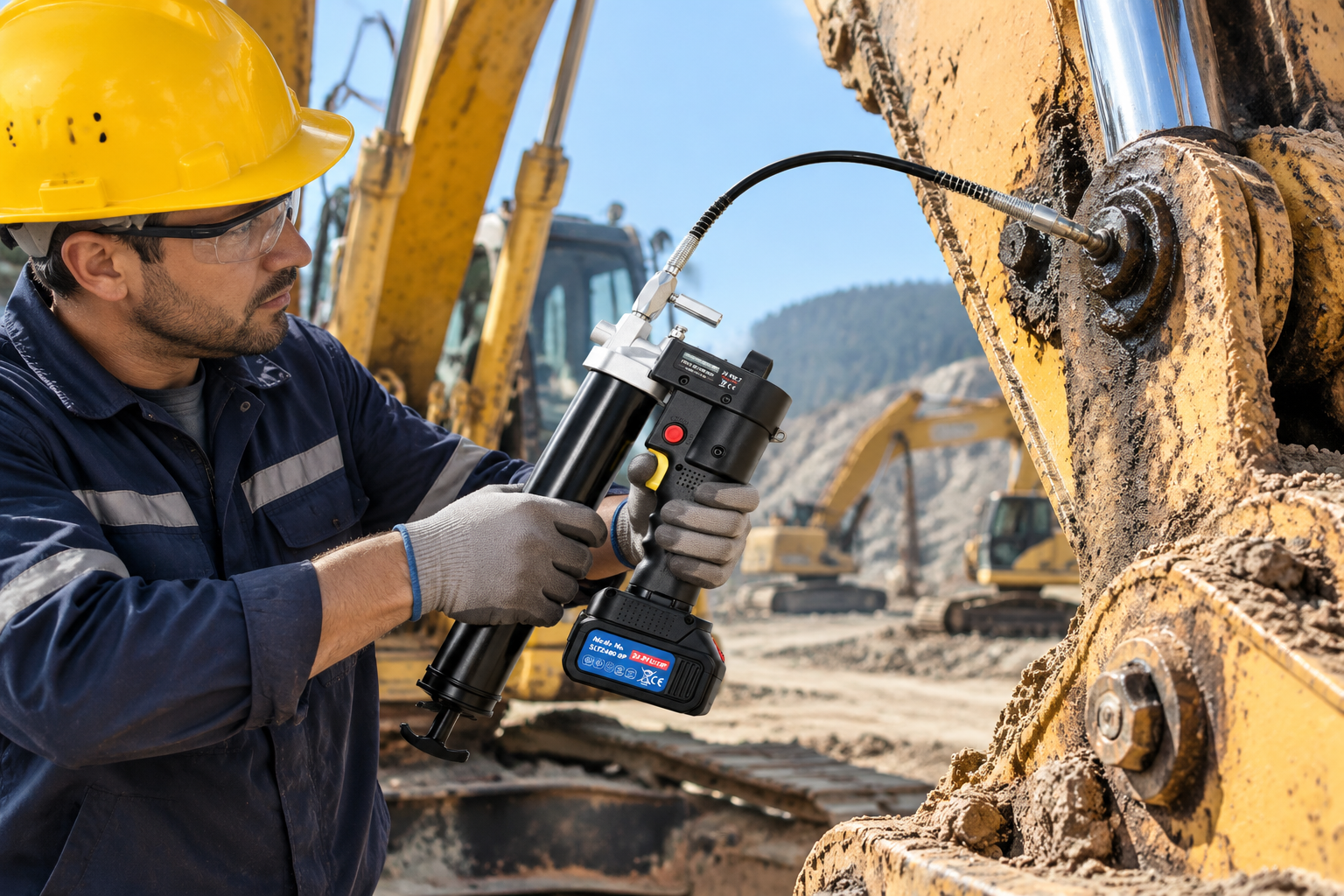
Regular lubrication is one of the most important maintenance tasks for excavators and other heavy equipment.
Excavators operate under extreme conditions, including heavy loads, dust, vibration, and continuous working cycles. Without proper lubrication, pins, bushings, bearings, and joints can experience increased friction and faster wear.
An electric grease gun helps maintenance teams complete lubrication work faster and more efficiently compared with traditional manual grease guns.
However, using the tool correctly is essential. Proper grease selection, correct lubrication points, and suitable operating procedures all affect maintenance results.
This guide explains how to use an electric grease gun for excavator maintenance and what professional users should consider when selecting a lubrication tool.
## Why Excavator Lubrication Is Important
An excavator contains many moving components that require regular lubrication.
Common lubrication areas include:
- Boom pins
- Arm pins
- Bucket linkage
- Swing system components
- Hydraulic attachment joints
- Other rotating or moving connections
These parts experience high mechanical stress during operation.
Grease creates a protective layer between moving surfaces, helping reduce friction and minimize wear.
Regular lubrication can help:
- Extend component service life
- Reduce unexpected downtime
- Improve equipment reliability
- Lower maintenance costs
## Step 1: Prepare the Electric Grease Gun
Before starting lubrication work, check the condition of the grease gun.
Important preparation steps include:
- Confirm the battery is charged
- Check the grease cartridge installation
- Inspect the hose and coupler
- Make sure the grease gun is properly primed
If the grease gun has an air lock after loading new grease, remove trapped air before operation.
A properly prepared grease gun provides more stable grease delivery.
## Step 2: Identify the Correct Lubrication Points
Different excavator models have different lubrication requirements.
Always follow the equipment manufacturer's maintenance recommendations.
Typical grease points include:
### Boom and Arm Connections
These areas experience significant movement and load during excavation work.
### Bucket Linkage
The bucket connection system requires regular lubrication because it operates under high mechanical stress.
### Swing Components
The swing system depends on proper lubrication to maintain smooth movement.
Before applying grease, clean the grease fitting area.
Removing dirt around the fitting helps prevent contamination from entering the lubrication system.
## Step 3: Connect the Grease Coupler Correctly
A secure connection between the grease coupler and grease fitting is important.
Incorrect connection may cause:
- Grease leakage
- Pressure loss
- Poor lubrication results
Make sure:
- The coupler is fully attached
- The connection is stable
- The hose is positioned safely
For difficult-to-reach lubrication points, a flexible high-pressure hose can improve accessibility.
## Step 4: Apply Grease Properly
When operating an electric grease gun, avoid applying excessive pressure without checking grease flow.
A professional lubrication process should focus on:
- Stable grease delivery
- Correct grease quantity
- Complete coverage of the lubrication point
Too little grease may not provide enough protection.
Too much grease may create unnecessary waste or pressure problems.
The correct amount depends on the equipment design and maintenance requirements.
## Step 5: Check for Proper Lubrication Results
After applying grease, inspect the lubrication point.
Check:
- Whether grease has entered correctly
- Whether there is unusual leakage
- Whether the fitting is damaged
If grease cannot enter the fitting, the problem may not be the grease gun.
Possible causes include:
- Blocked grease fitting
- Hardened old grease
- Damaged lubrication point
Troubleshooting the complete system is more effective than immediately replacing the tool.
## Choosing the Right Electric Grease Gun for Excavators
Not every grease gun is designed for heavy equipment maintenance.
Professional users should consider several factors.
## Pressure Capability
Excavators often require a grease gun with sufficient pressure capability because lubrication points may have high resistance.
A professional tool should provide stable pressure performance during daily operation.
## Grease Output Rate
Pressure alone does not determine efficiency.
Grease output affects how quickly maintenance work can be completed.
A balanced grease gun should provide both:
- Strong pressure capability
- Consistent grease delivery
## Battery Performance
Construction sites often do not have convenient power sources.
A cordless electric grease gun allows operators to move freely between machines.
Important battery factors include:
- Working time
- Charging speed
- Reliability
- Operating temperature range
## Durability for Industrial Environments
Excavator maintenance often happens outdoors.
A professional grease gun should handle:
- Dust
- Vibration
- Frequent use
- Changing weather conditions
Durable components and reliable design are important for long-term operation.
## SENLITE Electric Grease Guns for Excavator Maintenance
Dezhou Senlite Electromechanical Equipment Co., Ltd. (SENLITE) specializes in the development and manufacturing of electric grease guns and industrial lubrication tools.
SENLITE electric grease guns are designed for professional applications including:
- Excavators
- Construction machinery
- Heavy equipment
- Industrial maintenance
The SENLITE SLT2400 electric grease gun features:
- Up to 10000 PSI maximum pressure
- 400cc grease capacity
- Up to 130 g/min grease output
- Battery-powered cordless operation
- Adjustable pressure structure
- Safety valve protection
- LCD battery display
For equipment operators, maintenance companies, and distributors, choosing a reliable electric grease gun can improve lubrication efficiency and reduce equipment downtime.
## Conclusion
Using an electric grease gun correctly is an important part of effective excavator maintenance.
The best results come from combining the right tool, proper lubrication procedures, and regular maintenance habits.
For heavy equipment users, a professional cordless electric grease gun provides a practical solution for faster, safer, and more efficient lubrication work.
---
## FAQ
Q: How often should an excavator be greased?
A: Lubrication frequency depends on the excavator model, working conditions, and manufacturer recommendations. Heavy-duty applications usually require regular inspection and maintenance.
Q: Can an electric grease gun be used for excavators?
A: Yes. Professional electric grease guns are widely used for excavator pins, bushings, and other heavy equipment lubrication points.
Q: What pressure should an excavator grease gun have?
A: The required pressure depends on the equipment condition and lubrication requirements. Professional heavy equipment maintenance often requires a high-pressure grease gun with stable performance.
Q: Why is my grease gun not putting grease into the excavator fitting?
A: Common causes include air lock, blocked fittings, hardened grease, or an incorrect coupler connection.
Related products
Related articles
Electric Grease Gun vs Automatic Lubrication System: Which Is Better for Heavy Equipment?
Compare electric grease guns with automatic lubrication systems for heavy equipment. Learn about cost, maintenance, flexibility, lubrication control, and how to choose the right solution.
Will Any 14 oz Grease Cartridge Fit an Electric Grease Gun?
Learn how to check 14 oz grease cartridge compatibility, barrel dimensions, loading methods, and grease specifications before using an electric grease gun.
Grease Gun Coupler Types Explained: How to Choose the Right One for Heavy Equipment
Learn how to choose the right grease gun coupler for heavy equipment. Compare standard, locking, button-head and flush couplers, with tips on fitting compatibility, pressure ratings and safe use.