Technical Guides
How to Choose the Right Grease Gun for Industrial Equipment Maintenance
October 4, 2026 · SENLITE Admin
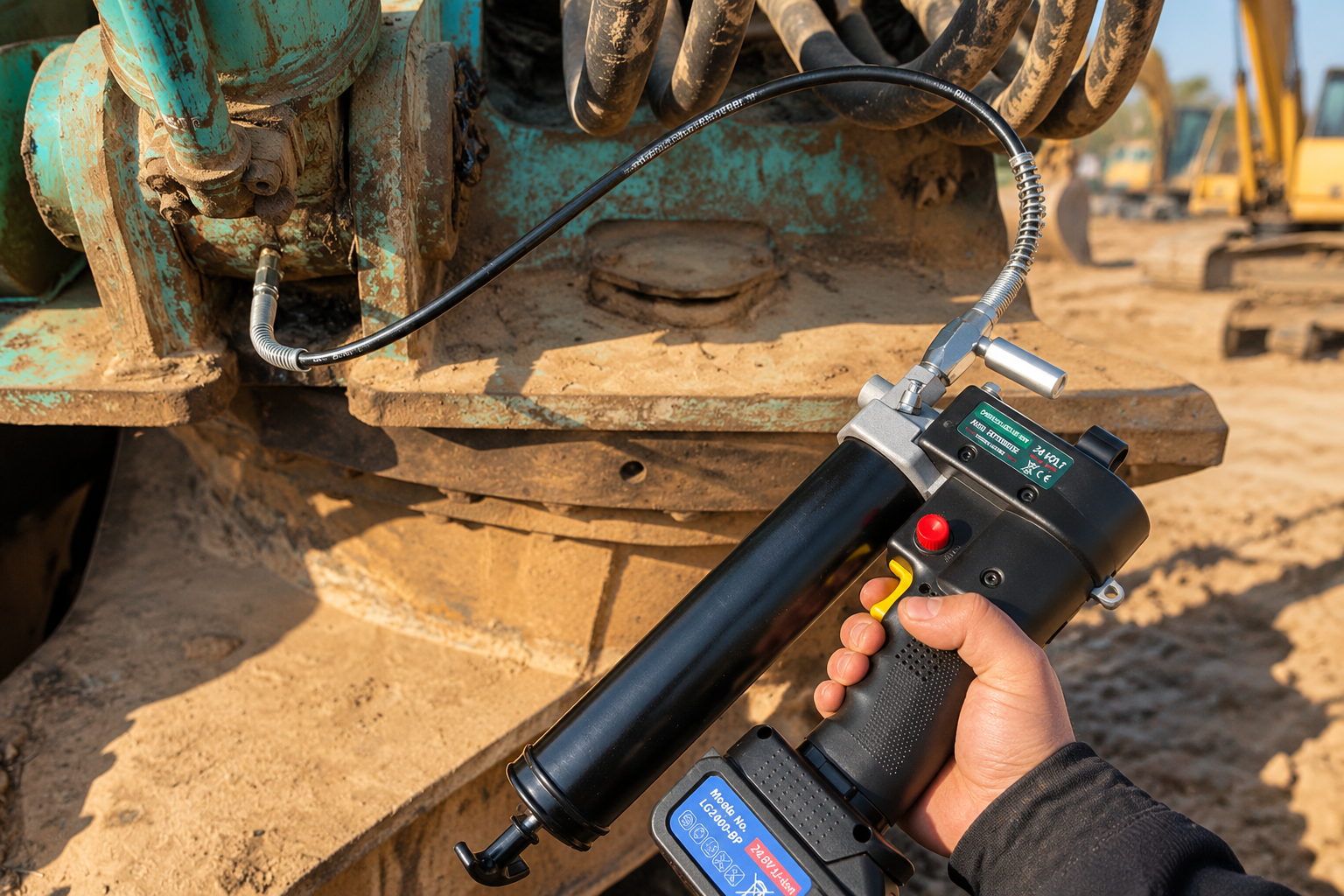
Industrial equipment requires regular lubrication to maintain reliable operation and reduce component wear.
From construction machinery and agricultural equipment to factory machines and transportation equipment, grease plays an important role in protecting moving parts.
However, choosing the right grease gun is not always simple.
Different applications require different levels of pressure, grease output, portability and durability.
A tool that works well for occasional maintenance may not be suitable for heavy equipment used every day.
This guide explains the key factors professional users should consider when choosing a grease gun for industrial equipment maintenance.
Why Choosing the Right Grease Gun Matters
Lubrication is a critical part of preventive maintenance.
Poor lubrication can lead to:
Increased friction
Faster component wear
Higher repair costs
Unexpected equipment downtime
A suitable grease gun helps operators deliver grease efficiently to important lubrication points.
For professional maintenance teams, the right tool can improve productivity and reduce physical effort.
Consider the Application Before Choosing a Grease Gun
The first step is understanding where the grease gun will be used.
Different industries have different requirements.
Construction Equipment
Excavators, loaders and other heavy machines often operate under difficult conditions.
They require lubrication tools that can handle:
High resistance lubrication points
Frequent daily use
Outdoor environments
Large numbers of grease fittings
Industrial Machinery
Factory equipment may require consistent lubrication performance and reliable operation.
Maintenance teams often focus on:
Efficiency
Durability
Easy operation
Agricultural Equipment
Farm machinery is often maintained outdoors and may require portable tools that can be moved between different machines.
Pressure Capability
Pressure is one of the most important factors when selecting a grease gun.
During equipment operation, grease fittings may become difficult to lubricate because of:
Old hardened grease
High mechanical loads
Contamination
Limited grease flow paths
A grease gun with sufficient pressure capability can help deliver grease into demanding lubrication points.
However, maximum pressure should not be the only factor.
Professional users should also evaluate:
Pressure stability
Pump design
Grease delivery performance
Component quality
A balanced lubrication system provides better long-term performance.
Grease Output Performance
Pressure and grease output are different measurements.
Pressure determines the pushing force.
Grease output determines how efficiently grease can be delivered.
For large equipment maintenance, stable grease output can save valuable working time.
A professional grease gun should provide:
Consistent grease flow
Reliable operation
Suitable output for the application
Manual, Pneumatic or Electric Grease Gun?
There are three common types of grease guns:
Manual Grease Gun
Advantages:
Simple structure
No power source required
Low maintenance
Limitations:
Requires physical effort
Slower for large maintenance tasks
Manual grease guns are suitable for occasional lubrication work.
Pneumatic Grease Gun
Advantages:
Powered by compressed air
Suitable for workshops with air systems
Limitations:
Requires compressor equipment
Less convenient for outdoor maintenance
Electric Grease Gun
Advantages:
Battery-powered operation
High mobility
Reduced operator fatigue
Suitable for field maintenance
Cordless electric grease guns are increasingly used for heavy equipment maintenance because they combine portability with professional performance.
Battery Performance for Cordless Grease Guns
For battery-powered grease guns, users should consider:
Battery capacity
Charging time
Battery availability
Continuous working requirements
Professional users working on multiple machines may prefer systems with spare battery options.
Reliable battery performance helps reduce interruptions during maintenance work.
Durability and Working Environment
Industrial maintenance environments can be demanding.
A professional grease gun should handle:
Dust
Oil contamination
Frequent operation
Outdoor conditions
Important durability factors include:
Strong housing materials
Reliable internal components
High-quality hose and fittings
Safety protection design
Safety Features
High-pressure lubrication tools should include proper safety considerations.
Useful features may include:
Pressure protection
Safety valves
Secure connections
Reliable couplers
These features help improve operator confidence during daily maintenance.
Ease of Use
A good industrial grease gun should make maintenance easier.
Professional users often value:
Comfortable grip design
Easy grease loading
Clear battery information
Simple operation controls
When equipment requires frequent lubrication, operator convenience becomes an important factor.
Choosing a Reliable Grease Gun Manufacturer
For distributors and professional buyers, selecting the right manufacturer is as important as selecting the right product.
A reliable manufacturer should provide:
Stable production capability
Product testing procedures
Technical support
Clear specifications
After-sales service
Long-term cooperation depends on consistent product quality and communication.
SENLITE Electric Grease Guns for Professional Applications
Dezhou Senlite Electromechanical Equipment Co., Ltd. (SENLITE) specializes in the development and manufacturing of electric grease guns and industrial lubrication tools.
SENLITE products are designed for professional applications including:
Excavator maintenance
Construction equipment lubrication
Agricultural machinery service
Industrial equipment maintenance
The product range includes:
SLT2100 Cordless Electric Grease Gun
Designed for professional users who need portable and reliable lubrication performance.
SLT2400 24V Electric Grease Gun
Features:
Maximum pressure up to 10,000 PSI
400cc (14 oz) grease capacity
Grease output up to 130 g/min
LCD battery display
Adjustable pressure structure
Safety valve protection
These features make it suitable for demanding lubrication tasks where mobility and efficiency are important.
Questions to Ask Before Buying a Grease Gun
Before purchasing, professional buyers should consider:
What equipment will the grease gun maintain?
Different machines require different lubrication performance.
How frequently will the tool be used?
Daily professional use requires higher durability.
Is mobility important?
Outdoor maintenance often benefits from cordless operation.
Does the supplier provide support?
Reliable technical support helps reduce future problems.
Conclusion
Choosing the right grease gun requires understanding the working environment, equipment requirements and maintenance expectations.
For professional users, important factors include pressure capability, grease output, durability, power source and ease of operation.
A suitable grease gun is not only a maintenance tool but also an investment in equipment reliability and productivity.
By selecting the right lubrication solution, businesses can improve maintenance efficiency and reduce unnecessary downtime.
Related products
Related articles
Electric Grease Gun vs Automatic Lubrication System: Which Is Better for Heavy Equipment?
Compare electric grease guns with automatic lubrication systems for heavy equipment. Learn about cost, maintenance, flexibility, lubrication control, and how to choose the right solution.
Will Any 14 oz Grease Cartridge Fit an Electric Grease Gun?
Learn how to check 14 oz grease cartridge compatibility, barrel dimensions, loading methods, and grease specifications before using an electric grease gun.
Grease Gun Coupler Types Explained: How to Choose the Right One for Heavy Equipment
Learn how to choose the right grease gun coupler for heavy equipment. Compare standard, locking, button-head and flush couplers, with tips on fitting compatibility, pressure ratings and safe use.