Technical Guides
How to Choose a Reliable Electric Grease Gun Manufacturer in China?
August 27, 2026 · SENLITE Admin
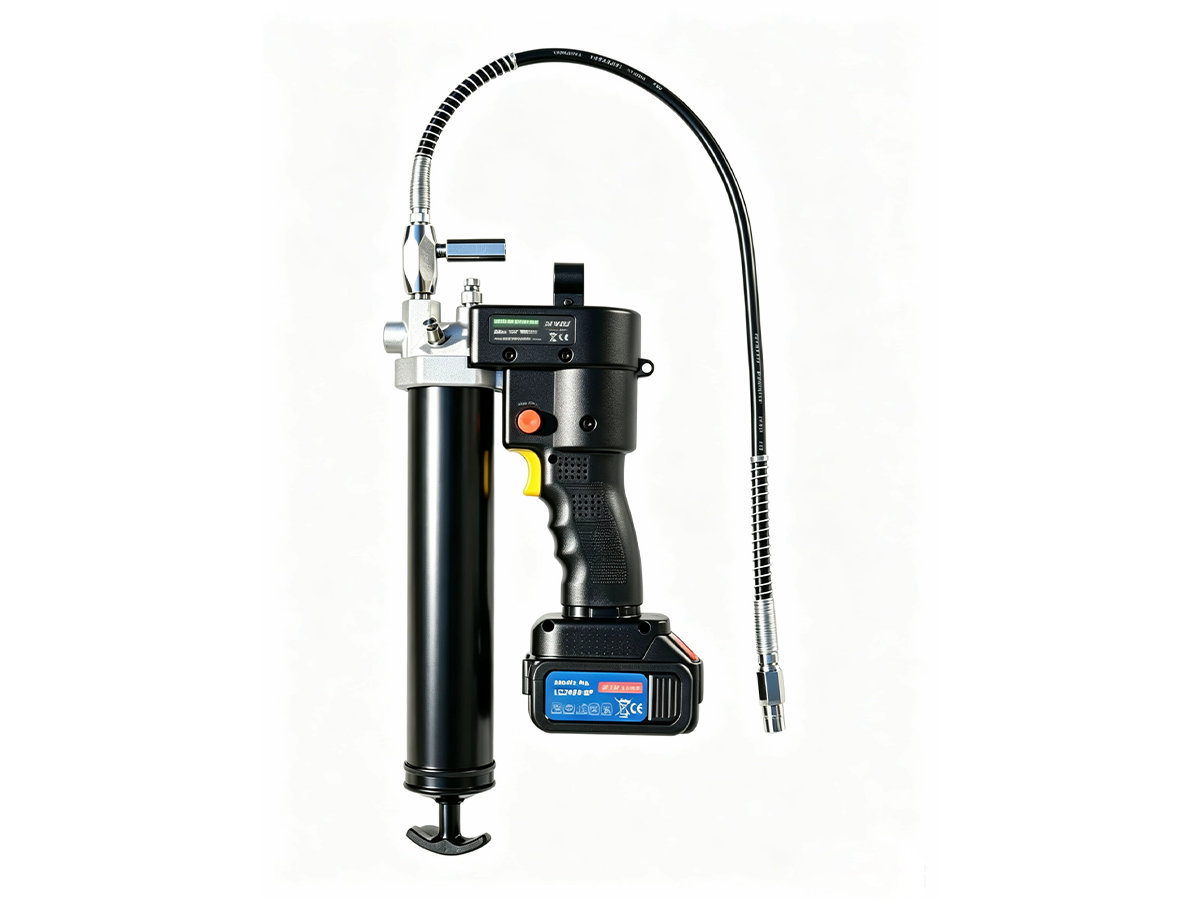
Choosing a reliable electric grease gun manufacturer in China requires more than comparing prices or checking a product catalog. For importers, distributors, tool brands, wholesalers, and industrial equipment suppliers, the real question is whether a manufacturer can consistently deliver electric grease guns that meet your technical requirements, quality standards, customization needs, and delivery schedule.
China has a large industrial tool manufacturing supply chain, and buyers can find many suppliers offering cordless grease guns, battery-powered grease guns, manual grease guns, and other lubrication equipment. However, manufacturing capability can vary significantly from one supplier to another.
A reliable supplier should be evaluated from several perspectives: manufacturing experience, product engineering, pressure and performance testing, quality control, battery system reliability, OEM/ODM capability, production capacity, export experience, and after-sales support.
This guide explains the key factors B2B buyers should check before selecting an electric grease gun manufacturer in China.
What Is an Electric Grease Gun?
An electric grease gun is a powered lubrication tool designed to deliver grease into bearings, joints, fittings, and other lubrication points. Unlike a traditional manual grease gun, an electric model uses a motor and battery-powered drive system to generate grease flow and pressure.
Cordless electric grease guns are commonly used for maintenance of:
Construction machinery
Excavators and loaders
Agricultural machinery
Trucks and commercial vehicles
Industrial equipment
Mining equipment
Factory machinery
Fleet maintenance equipment
For operators who need to lubricate many grease points regularly, a cordless grease gun can reduce repetitive manual pumping and improve maintenance efficiency.
For B2B buyers, however, choosing the product itself is only part of the purchasing decision. The capability of the manufacturer behind the product is equally important.
1. Verify Whether the Supplier Is a Real Manufacturer
The first step is to determine whether you are dealing with an actual electric grease gun manufacturer or primarily a trading company.
This distinction does not automatically mean that every factory is better than every trading company. However, buyers looking for long-term OEM production, product customization, stable quality control, or technical development usually need direct access to manufacturing and engineering capabilities.
Ask the supplier for information about:
Factory location and production area
Production and assembly lines
Number of employees
R&D or engineering team
Quality-control procedures
Testing equipment
Production capacity
Product development capabilities
Factory videos, production photographs, audit documents, live video inspections, and third-party factory audits can provide additional verification.
A supplier should be able to explain how an electric grease gun moves from incoming components through assembly, testing, packaging, and final inspection.
2. Evaluate Product Development and R&D Capability
Electric grease guns combine mechanical, electrical, hydraulic, battery, sealing, and structural components. This makes engineering capability particularly important.
For distributors and private-label brands, an experienced R&D team can help with more than simply changing a logo.
Depending on the project, OEM and ODM requirements may include:
Product appearance
Housing color
Branding and labels
Battery configuration
Grease hose specifications
Couplers and accessories
Packaging
Carrying cases
Instruction manuals
Market-specific configurations
Before starting an OEM project, buyers should determine which changes are cosmetic and which require engineering validation.
Changing a color or packaging design is very different from modifying the pressure system, motor, battery, gearbox, grease path, or structural components.
A capable manufacturer should clearly explain this difference instead of agreeing to every customization request without technical evaluation.
3. Do Not Evaluate an Electric Grease Gun by Maximum Pressure Alone
Maximum pressure is one of the most visible specifications on an electric grease gun, but it should not be the only purchasing criterion.
A high advertised PSI value does not automatically mean better real-world performance.
Buyers should evaluate several related factors together:
Maximum operating pressure
Grease output or flow rate
Pressure stability
Motor performance
Gear and transmission durability
Hose pressure resistance
Seal reliability
Coupler quality
Battery performance
Performance under continuous use
The correct pressure requirement also depends on the intended application.
For example, maintenance requirements for agricultural equipment may differ from those for trucks, excavators, automotive workshops, or industrial machinery.
Instead of asking only, “What is the maximum PSI?”, a professional buyer should ask:
How is the pressure tested, under what conditions, and can the manufacturer provide repeatable test data?
That question provides much more useful information about manufacturing quality.
4. Ask About Quality Control and Testing
Quality control is one of the strongest indicators of whether a Chinese electric grease gun supplier is suitable for long-term cooperation.
Electric grease guns operate under pressure, so leakage, unstable output, weak seals, damaged hoses, poor electrical connections, or inconsistent assembly can quickly become serious customer complaints.
A professional factory should have inspection procedures covering important stages of production.
Depending on the product design, relevant checks may include:
Incoming material inspection
Motor inspection
Battery inspection
Assembly inspection
Pressure testing
Grease output testing
Leakage inspection
Hose and connector inspection
Functional testing
Packaging inspection
Final product inspection
For large orders, buyers can also establish an agreed inspection standard before mass production.
The important point is not simply whether a supplier says “100% quality control.” Buyers should ask what is actually tested, how it is tested, what acceptance criteria are used, and how non-conforming products are handled.
5. Check Battery and Electrical System Reliability
For a cordless grease gun, battery performance directly affects the user experience.
B2B buyers should therefore evaluate the battery system rather than treating the battery as a secondary accessory.
Questions may include:
What battery platform does the model use?
What is the rated battery capacity?
What type of cells are used?
What charging system is supplied?
What protection functions are included?
Are replacement batteries available?
Can battery configuration be customized for an OEM project?
For distributors, replacement battery availability is particularly important because the grease gun may remain in service for years.
A product with acceptable initial performance but poor replacement-part availability can create unnecessary after-sales problems.
6. Test Samples Before Placing a Large Order
For a new supplier, buyers should avoid making a large purchasing decision based only on photos, specifications, or quotations.
Request production samples and test them under conditions close to the actual target application.
Sample evaluation can include:
Grease delivery performance
Pressure performance
Leakage
Hose flexibility
Coupler connection
Trigger response
Battery endurance
Charging
Grip comfort
Weight balance
Noise
Temperature during extended operation
Packaging protection
Importers should also verify compatibility with the grease cartridges, fittings, thread standards, and accessories used in their target market.
A sample is not merely a product demonstration. It should be treated as part of supplier qualification.
7. Evaluate OEM and ODM Capability
Many overseas buyers are not simply looking for a generic electric grease gun. They want products that can be sold under their own brand.
Typical OEM requirements may include:
Private logo
Custom product colors
Product labels
Customized cartons
Carrying cases
User manuals
Barcode labels
Accessory combinations
Market-specific packaging
More advanced ODM projects may involve structural or functional development.
Before ordering, confirm the MOQ, development cost, tooling requirements, sample lead time, production lead time, and ownership of customized designs.
A reliable manufacturer should define these items before mass production rather than leaving them unclear until the order is underway.
8. Check Production Capacity and Delivery Stability
Price is important, but an inexpensive supplier that cannot deliver consistently may become expensive very quickly.
For distributors and importers, delayed shipments can lead to stock shortages, missed seasonal demand, customer complaints, and higher logistics costs.
Ask the manufacturer about:
Monthly production capacity
Number of production lines
Normal lead time
Peak-season lead time
Raw-material planning
Production scheduling
Packaging capacity
Export loading experience
For repeat orders, consistency matters more than producing one successful sample.
The supplier should be able to reproduce the approved specification from one production batch to the next.
9. Consider Export Experience and Market Requirements
A manufacturer experienced in international business usually understands that different markets can have different requirements for product configuration, packaging, labeling, documentation, and compliance.
Buyers should clearly state the destination market at the beginning of the sourcing process.
For example, requirements for products sold in the United States may not be identical to those for products sold in France, Russia, or Southeast Asian markets.
Before placing an order, confirm which certifications, declarations, labels, battery transportation documents, manuals, or other documents are required for your specific market and product configuration.
Do not assume that one certificate automatically covers every model or destination.
Verification should be based on the actual product and applicable market requirements.
10. Evaluate Spare Parts and After-Sales Support
Industrial tool sourcing does not end when the container leaves the factory.
Distributors need to consider what happens after products reach end users.
Ask whether the manufacturer can provide replacement or service parts such as:
Batteries
Chargers
Grease hoses
Couplers
Seals
Other model-specific components
Also establish a clear process for handling defective products, technical questions, warranty claims, and replacement parts.
For a long-term distributor relationship, after-sales support can be as important as the original purchase price.
11. Compare Total Purchasing Value, Not Just Unit Price
One of the most common sourcing mistakes is selecting an electric grease gun manufacturer solely because its quotation is lower.
The real purchasing cost includes more than the FOB unit price.
Consider:
Total Purchasing Value = Product Cost + Quality Stability + Delivery Reliability + After-Sales Support + Customization Capability + Communication Efficiency
A slightly lower purchase price can lose its advantage if the order later produces higher defect rates, inconsistent batches, delayed deliveries, missing spare parts, or repeated customer complaints.
Professional procurement therefore focuses on total value and long-term supply stability rather than the lowest quotation alone.
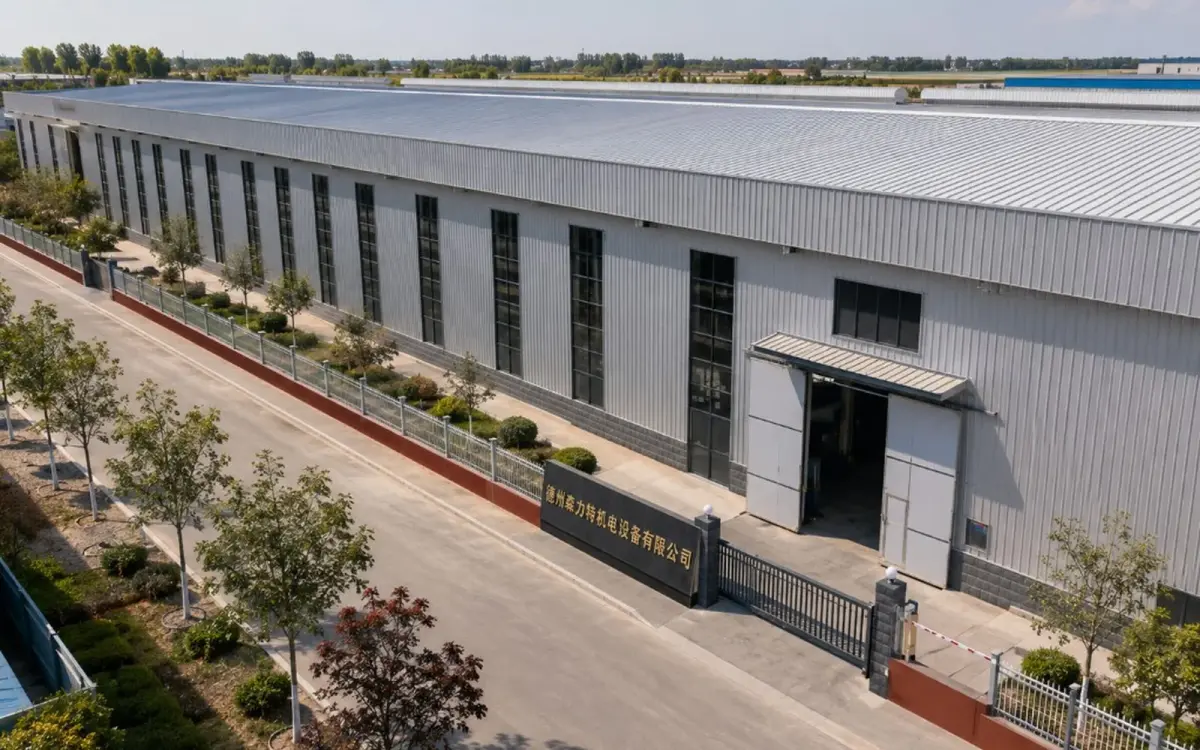
Why Work With Dezhou Senlite Electromechanical Equipment Co., Ltd.?
Dezhou Senlite Electromechanical Equipment Co., Ltd. is a China-based manufacturer specializing in electric grease guns and industrial lubrication tools.
Our company integrates product development, manufacturing, sales, and export support. We have a team of 128 employees, including a 20-person R&D department, supporting product development, manufacturing improvement, OEM/ODM projects, and customer-specific requirements.
Our manufacturing base covers more than 10,000 square meters and supports production, assembly, quality inspection, packaging, warehousing, and export operations.
Senlite serves customers in international markets including the United States, France, Russia, Southeast Asia, and other regions.
For importers, distributors, tool brands, and industrial equipment suppliers, our objective is not simply to supply an electric grease gun. We aim to build stable manufacturing relationships based on product consistency, technical communication, customization capability, quality control, and reliable delivery.
Questions to Ask Before Choosing an Electric Grease Gun Manufacturer
Before approving a new supplier, B2B buyers can use the following checklist:
Are you the actual manufacturer of the electric grease gun?
Where is your factory located?
How many employees and R&D engineers do you have?
What electric grease gun models do you manufacture?
How do you test grease pressure and output?
What quality inspections are performed during production?
Can I test production samples before placing a bulk order?
Do you provide OEM or ODM services?
Can you customize colors, logos, labels, packaging, and accessories?
What is your MOQ?
What is your normal production lead time?
What spare parts are available?
Which export markets do you currently serve?
What documents or certifications are available for the specific model?
How do you handle quality claims after shipment?
A manufacturer that can answer these questions clearly and provide supporting evidence is generally easier to evaluate than one that relies only on a low quotation.
Frequently Asked Questions
How do I find a reliable electric grease gun manufacturer in China?
Start by identifying manufacturers with verifiable production facilities, relevant product experience, testing capability, quality-control procedures, R&D support, and export experience. Request samples and evaluate them before placing a large order. For important projects, factory audits or third-party inspections can provide additional verification.
What should I test when buying an electric grease gun?
Important evaluation points include pressure performance, grease output, leakage, hose and coupler quality, battery endurance, charging performance, trigger operation, ergonomics, continuous-use performance, and compatibility with the grease and fittings used in your target market.
Can Chinese electric grease gun manufacturers provide OEM services?
Yes. Many manufacturers provide OEM services such as logo printing, product colors, labels, packaging, carrying cases, manuals, and accessory configurations. More complex ODM projects may require engineering development, tooling, testing, and additional lead time.
Should I choose the supplier with the highest PSI?
Not necessarily. Maximum pressure is only one specification. Buyers should also evaluate grease flow, pressure stability, sealing reliability, hose quality, motor performance, battery endurance, ergonomics, and actual application requirements.
Is factory inspection necessary before placing an order?
It depends on the order size and risk level. Buyers can use factory videos, live inspections, samples, audit reports, or third-party inspections. For large or long-term sourcing programs, a more detailed supplier qualification process is recommended.
Why is R&D capability important for an electric grease gun manufacturer?
Electric grease guns combine mechanical components, motors, batteries, pressure systems, seals, hoses, and electronic components. A capable engineering team can support product improvement, troubleshooting, OEM development, and market-specific customization.
Final Thoughts
Choosing a reliable electric grease gun manufacturer in China should be treated as a supplier qualification process rather than a simple price comparison.
For B2B buyers, the strongest supplier is usually not the company that makes the biggest marketing claims. It is the manufacturer that can provide verifiable answers about its factory, engineering capability, product testing, quality control, production capacity, customization process, delivery schedule, and after-sales support.
Before placing a bulk order, define your technical requirements, identify your target market, request samples, verify important specifications, confirm OEM requirements, and establish clear quality standards.
This approach helps importers, distributors, wholesalers, and private-label brands reduce sourcing risk and build a more stable electric grease gun supply chain.
Dezhou Senlite Electromechanical Equipment Co., Ltd. specializes in electric grease guns and industrial lubrication tools and supports international B2B customers with manufacturing, product development, OEM/ODM customization, quality control, and export supply.
For buyers evaluating a long-term electric grease gun manufacturing partner in China, supplier capability should always be verified through products, processes, testing, and consistent delivery—not marketing claims alone.
Related products
Related articles
SENLITE Supports OEM and ODM Lubrication Tool Projects
SENLITE works with overseas distributors and tool brands on customized grease gun and lubrication tool projects.
Quality Control Steps in Grease Gun Production
An introduction to SENLITE's process-focused quality control approach from incoming materials to final packaging.