Technical Guides
How Proper Lubrication Maintenance Extends Heavy Equipment Service Life
October 8, 2026 · SENLITE Admin
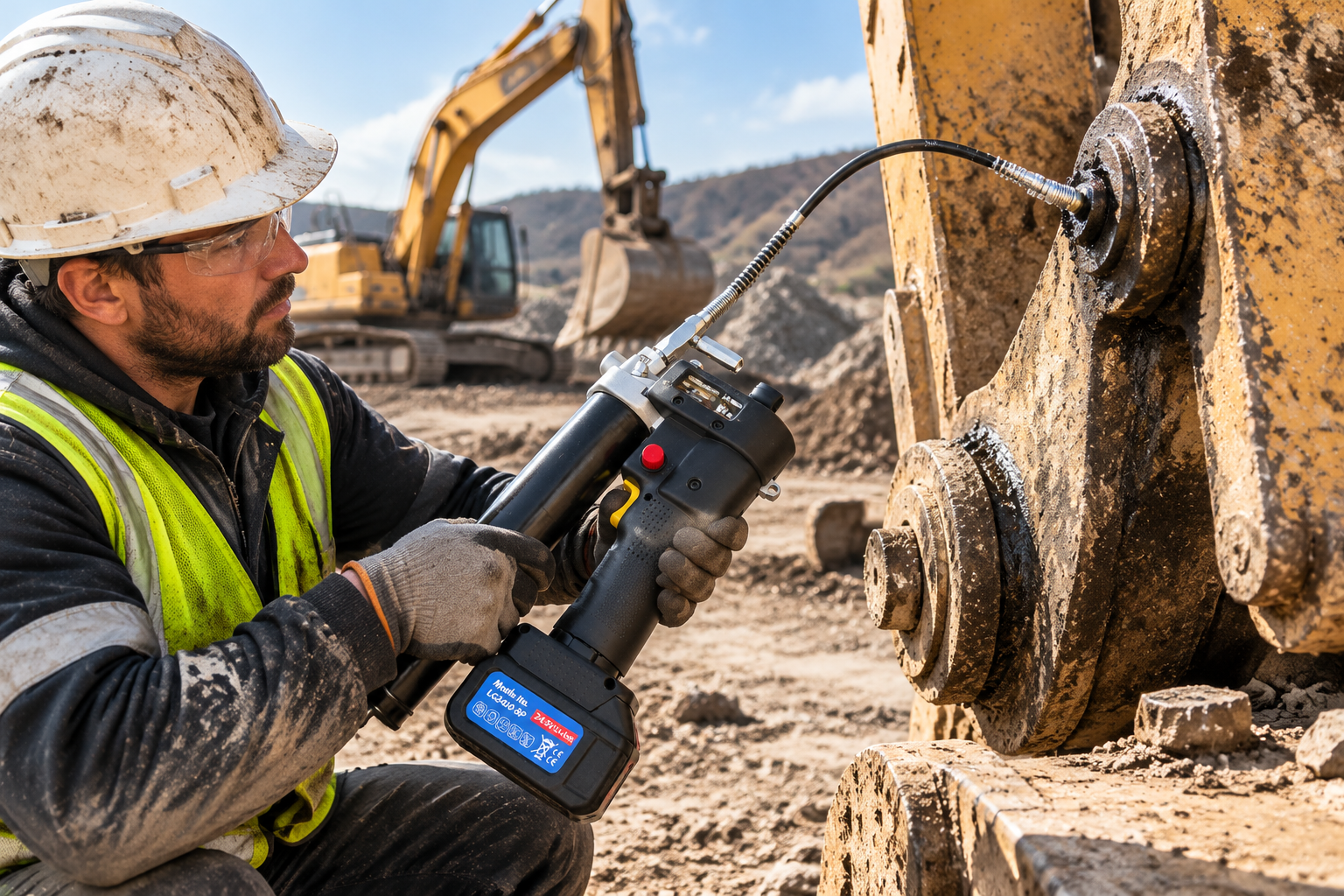
Heavy equipment is designed to operate under demanding conditions, but even the strongest machines depend on proper maintenance to achieve long service life.
Excavators, loaders, agricultural machines and industrial equipment contain many moving components that experience continuous pressure, vibration and friction.
Without proper lubrication, wear can accelerate and maintenance costs can increase significantly.
A professional lubrication program is not simply about adding grease when a component becomes noisy.
It is a preventive maintenance process that protects critical parts, reduces downtime and helps equipment operate more reliably.
This guide explains how proper lubrication maintenance extends heavy equipment service life and how professional users can improve their maintenance practices.
Why Lubrication Is Critical for Heavy Equipment
Heavy equipment contains many mechanical connections that move under high loads.
Common examples include:
Pins
Bushings
Bearings
Joints
Rotating components
During operation, metal surfaces experience friction.
Lubricating grease creates a protective layer between moving surfaces, reducing direct metal contact.
Proper lubrication helps:
Reduce friction
Minimize wear
Protect components
Improve operating efficiency
Reduce unexpected repairs
For companies operating expensive machinery, regular lubrication is one of the most cost-effective maintenance activities.
How Poor Lubrication Causes Equipment Damage
Many equipment failures develop gradually.
A lubrication problem may begin with small changes:
Increased resistance
Unusual noise
Higher operating temperature
Reduced movement smoothness
Over time, insufficient lubrication can contribute to:
Worn pins and bushings
Increased component clearance
Expensive replacement parts
Longer machine downtime
Once severe wear occurs, adding grease alone cannot restore damaged components.
This is why preventive lubrication is more valuable than reactive repair.
Understanding the Importance of Lubrication Points
Every heavy machine has specific lubrication points that require attention.
For excavators, common areas include:
Boom and Arm Connections
These joints handle large mechanical forces during digging operations.
Regular lubrication helps protect pins and bushings from excessive wear.
Bucket Linkage
The bucket connection system experiences repeated movement and heavy loads.
Consistent grease application helps maintain smoother operation.
Swing and Rotating Components
Rotating structures require proper lubrication to reduce friction and support reliable movement.
Attachment Systems
Different attachments may create additional lubrication requirements depending on usage.
Operators should always follow equipment manufacturer recommendations.
Why Lubrication Schedule Matters
Many maintenance problems happen because lubrication is inconsistent.
A proper schedule depends on:
Equipment type
Working environment
Operating hours
Load conditions
Weather conditions
Machines working in:
Construction sites
Mining areas
Muddy environments
High-dust locations
may require more frequent inspection and lubrication.
A regular maintenance routine is more effective than waiting until a problem appears.
Choosing the Correct Grease
Using the correct grease is an important part of equipment maintenance.
Different applications may require different grease characteristics, including:
Temperature resistance
Water resistance
Load capability
Mechanical stability
The most expensive grease is not always the best choice.
The correct lubricant should match:
Equipment requirements
Operating conditions
Manufacturer recommendations
Mixing incompatible grease products should also be avoided because it may affect lubrication performance.
The Role of a Professional Grease Gun
The grease gun is the connection between maintenance workers and equipment lubrication points.
For professional applications, the tool should provide:
Reliable Pressure
Some lubrication points become difficult because of hardened grease, contamination or high mechanical resistance.
A suitable grease gun should provide stable pressure performance.
Consistent Grease Output
Stable grease delivery helps operators complete maintenance efficiently.
Easy Operation
Large machines may contain dozens of grease points.
A comfortable and efficient lubrication tool reduces operator fatigue.
Electric Grease Guns for Heavy Equipment Maintenance
Traditional manual grease guns are still used in many applications.
However, for large equipment fleets, cordless electric grease guns provide several advantages:
Faster lubrication
Less physical effort
Improved mobility
More consistent grease delivery
Because heavy equipment is often maintained outdoors, battery-powered grease guns allow technicians to move freely without air compressors or additional equipment.
Common Lubrication Mistakes to Avoid
Ignoring Dirty Grease Fittings
Dirt around a fitting can enter the lubrication system during greasing.
Always clean fittings before connecting the coupler.
Overlooking Difficult Lubrication Points
Some fittings require more attention because they experience higher loads.
Do not assume every grease point requires the same frequency.
Using Incorrect Grease
A lubricant that does not match the application may reduce protection instead of improving it.
Waiting Until Problems Appear
Noise, looseness and abnormal movement often indicate that wear has already started.
Preventive maintenance should happen before visible problems develop.
How Professional Maintenance Teams Improve Efficiency
Large equipment operators usually improve lubrication efficiency through standard procedures.
Effective practices include:
Creating Lubrication Records
Record:
Equipment information
Lubrication points
Maintenance dates
Grease type used
This helps identify problems early.
Training Operators
Correct lubrication technique is as important as the tool itself.
Operators should understand:
Where to lubricate
How much grease is required
How to identify abnormal conditions
Using Reliable Tools
Professional tools reduce maintenance time and improve consistency.
A reliable electric grease gun can become an important part of a preventive maintenance system.
SENLITE Electric Grease Guns for Heavy Equipment Applications
Dezhou Senlite Electromechanical Equipment Co., Ltd. (SENLITE) specializes in the development and manufacturing of electric grease guns and industrial lubrication tools.
SENLITE products are designed for professional users including:
Construction equipment operators
Machinery distributors
Maintenance companies
Industrial service providers
The product range includes:
SLT2100 Cordless Electric Grease Gun
Designed for mobile maintenance applications requiring reliable lubrication performance.
SLT2400 24V Electric Grease Gun
Features:
Maximum pressure up to 10,000 PSI
400cc (14 oz) grease capacity
Grease output up to 130 g/min
LCD battery display
Adjustable pressure structure
Safety valve protection
These features support professional lubrication tasks for:
Excavators
Heavy machinery
Agricultural equipment
Industrial applications
Building a Long-Term Equipment Maintenance Strategy
Extending equipment life requires a complete approach.
Important elements include:
Regular lubrication
Correct grease selection
Equipment inspection
Reliable maintenance tools
Operator training
Lubrication should be viewed as an investment rather than a routine expense.
A well-maintained machine provides better productivity, fewer unexpected failures and lower long-term operating costs.
Conclusion
Proper lubrication maintenance plays an essential role in extending heavy equipment service life.
By following correct lubrication schedules, selecting suitable grease and using reliable maintenance tools, operators can reduce wear and improve equipment reliability.
For companies managing construction machinery and industrial equipment, a professional lubrication system helps protect valuable assets and support long-term operation.
Related products
Related articles
Electric Grease Gun vs Automatic Lubrication System: Which Is Better for Heavy Equipment?
Compare electric grease guns with automatic lubrication systems for heavy equipment. Learn about cost, maintenance, flexibility, lubrication control, and how to choose the right solution.
Will Any 14 oz Grease Cartridge Fit an Electric Grease Gun?
Learn how to check 14 oz grease cartridge compatibility, barrel dimensions, loading methods, and grease specifications before using an electric grease gun.
Grease Gun Coupler Types Explained: How to Choose the Right One for Heavy Equipment
Learn how to choose the right grease gun coupler for heavy equipment. Compare standard, locking, button-head and flush couplers, with tips on fitting compatibility, pressure ratings and safe use.