Technical Guides
How Much Grease Should You Apply? Avoid Overgreasing and Undergreasing
October 17, 2026 · SENLITE Admin
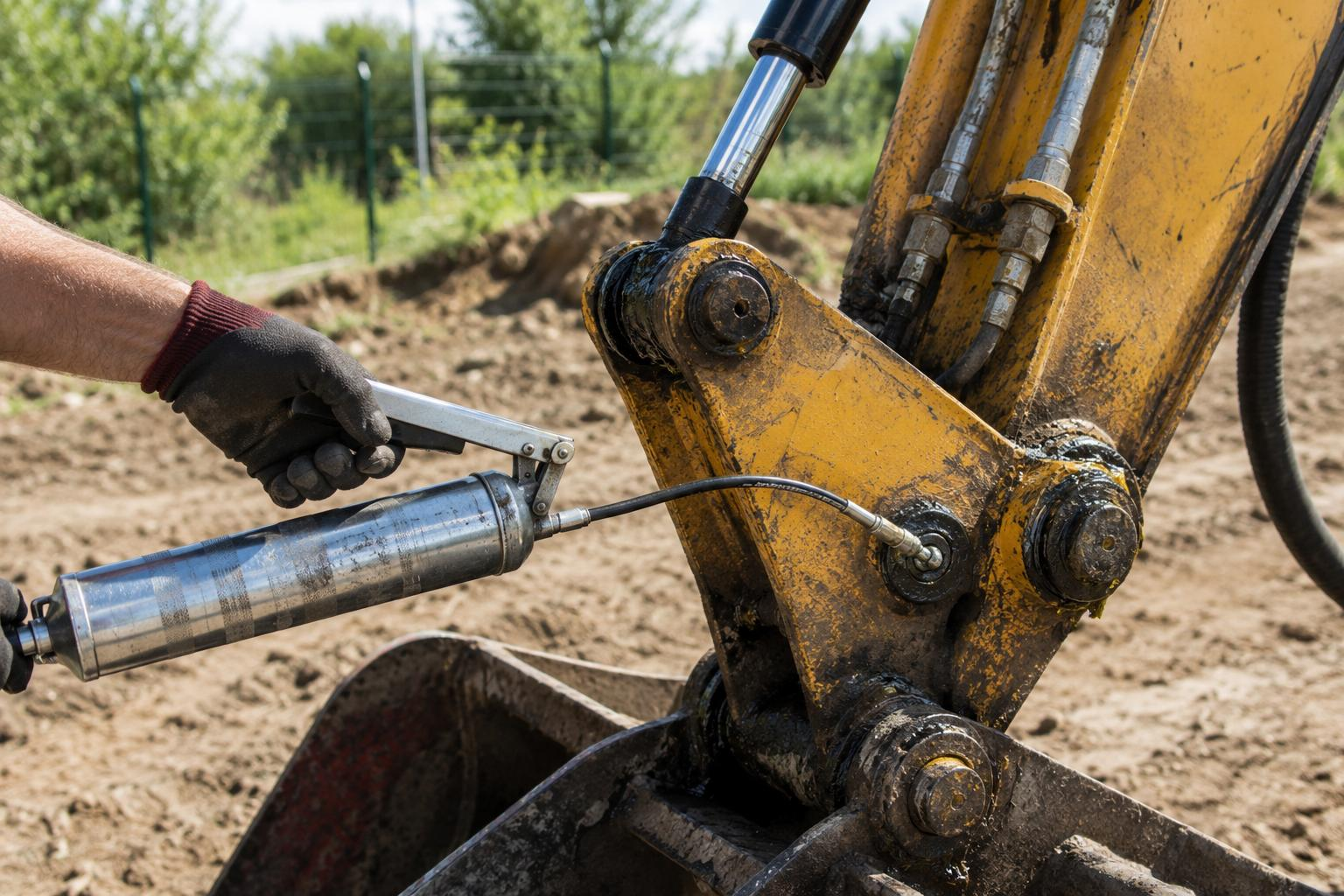
Applying the correct amount of grease is an important part of equipment maintenance. Too little grease can leave moving components without adequate lubrication, while too much grease can create additional resistance, leakage, contamination, or other problems depending on the component design.
For technicians maintaining excavators, loaders, agricultural machinery, and industrial equipment, the challenge is not simply getting grease into a lubrication point. It is delivering the appropriate amount at the correct interval.
An electric grease gun makes grease delivery easier, but it does not automatically determine how much grease a bearing, pin, or bushing requires.
Understanding the difference between grease delivery and lubrication quantity helps maintenance teams make better decisions, avoid common mistakes, and protect expensive equipment.
Why the Correct Grease Quantity Matters
Lubricating grease helps reduce friction, protect surfaces, and limit wear between moving components. However, the amount required depends on the component and its working conditions.
Insufficient lubrication can allow excessive contact between surfaces and accelerate wear. Inadequate grease supply may also contribute to rising temperatures, abnormal noise, or premature component damage.
Excessive grease can cause different problems.
In rolling bearings, too much grease may increase resistance as the rolling elements move through the lubricant. This can generate additional heat, especially in applications where rotational speed and bearing design make excess grease particularly undesirable.
Excess grease can also escape through seals or designated outlets. Depending on the component, repeated leakage may create a contamination problem or indicate that the lubrication procedure needs review.
The correct approach is not to use the maximum amount possible. It is to follow the lubrication requirements for the specific component.
How Much Grease Should You Apply?
There is no single quantity that applies to every bearing, excavator pin, bushing, or industrial lubrication point.
The required amount depends on several factors:
Component type and internal geometry
Manufacturer's lubrication specifications
Operating speed and load
Grease type and consistency
Working temperature
Lubrication interval
Whether the component has a designated grease outlet
A rolling bearing in an industrial motor and a heavily loaded excavator bucket pin have different lubrication requirements. A quantity suitable for one should not automatically be applied to the other.
Start With the Equipment Manufacturer's Instructions
The equipment manufacturer's maintenance manual should be the first reference.
Look for the specified grease type, lubrication interval, quantity, and any instructions about purging old grease or checking for fresh grease at an outlet.
If a quantity is specified in grams, use that value rather than estimating the amount from how long the trigger is held.
If the manual specifies a particular lubrication procedure without providing a simple quantity, follow that procedure instead of inventing a universal number of pumps.
Do Not Apply the Same Rule to Every Bearing
Bearing manufacturers may provide calculation methods for particular bearing designs and relubrication arrangements.
Those methods depend on defined dimensions and application assumptions. They are not universal formulas for every machine component.
In particular, a general bearing calculation should not be used to determine the grease quantity for an excavator pin or bushing unless the equipment manufacturer specifically supports that method.
For professional maintenance, the component-specific instructions take priority over general rules of thumb.
Can You Overgrease a Bearing With an Electric Grease Gun?
Yes. An electric grease gun can deliver more grease than a component requires if the operator continues pumping beyond the recommended amount.
Powered operation reduces repetitive manual effort, but it can also make it easier to deliver grease quickly.
This is why users must distinguish between the tool's delivery capability and the quantity the equipment actually needs.
Potential warning signs of excessive lubrication include:
Persistent grease leakage around seals
Grease escaping from locations where it is not expected
A bearing running hotter after lubrication
Repeated seal leakage following maintenance
Grease accumulating around the housing
These signs do not prove overgreasing on their own. Damaged seals, blocked relief paths, incorrect grease, and other mechanical problems can produce similar symptoms.
If a bearing consistently becomes hotter after lubrication, do not automatically add more grease. Check the specified quantity, lubrication procedure, component condition, and operating conditions.
What Happens When Equipment Is Undergreased?
Undergreasing creates a different set of risks.
When the lubricant supply is insufficient, the component may not maintain the protective lubrication film required by its design and operating conditions.
Possible consequences include:
Increased friction and surface wear
Abnormal operating noise
Rising temperature
Accelerated wear of pins or bushings
Reduced component service life
Unexpected maintenance downtime
However, these symptoms can also have other causes. Noise or heat alone cannot establish that a component needs more grease.
A proper inspection should consider lubrication history, grease condition, component wear, operating load, and the manufacturer's maintenance requirements.
Adding grease without identifying the cause may fail to solve the underlying problem.
Why a Grease Gun's Output Rate Is Not the Same as a Recommended Dose
Grease gun specifications commonly include maximum pressure and grease output.
These figures describe different performance characteristics.
Pressure indicates the tool's ability to move grease against resistance. Output rate describes how quickly grease can be delivered under specified conditions.
Neither value independently tells the operator how much grease a particular component needs.
For example, a grease gun with a high maximum output rate may deliver a substantial quantity of grease in a short period. That capability can be useful when the application requires it, but it does not mean every lubrication point should receive that amount.
Actual delivery can also vary with grease characteristics, temperature, resistance, and operating conditions.
Therefore, holding an electric grease gun's trigger for a fixed number of seconds should not be assumed to deliver a precise quantity unless the tool has a suitable metering function or its output has been measured under controlled conditions.
How to Improve Grease Quantity Control
Professional maintenance teams can reduce guesswork by using a repeatable lubrication procedure.
1. Identify the Lubrication Point
Confirm whether the component is a bearing, pin, bushing, joint, or another type of assembly.
Do not assume that nearby components require the same quantity of grease.
2. Confirm the Required Grease
Check the equipment manufacturer's requirements for grease type and consistency.
Do not change lubricant simply because another grease is easier to pump.
3. Follow the Specified Quantity or Procedure
Use the documented quantity where one is provided.
If the maintenance procedure specifies an observable endpoint, such as grease appearing at a designated purge location, confirm that this is appropriate for the particular component.
Do not assume that grease must always emerge from a seal. Some components are not designed to be lubricated until grease escapes.
4. Measure Output When Repeatability Matters
For maintenance operations that require controlled quantities, a calibrated grease meter or another suitable measurement method can help establish how much grease is actually delivered.
If a grease gun's output is measured for a particular operating setup, record the conditions and repeat the measurement to check consistency.
Use an appropriate test fixture and follow the manufacturer's safety instructions. Never direct a pressurized grease outlet toward your hand or body to estimate output.
A measured delivery rate can support a maintenance procedure, but it does not replace the equipment manufacturer's specified grease quantity.
5. Keep Maintenance Records
For equipment fleets, record the lubrication date, component, grease product, quantity where specified, and any unusual observations.
These records help identify repeated leakage, inconsistent servicing, and components that require inspection.
They also reduce the risk of different technicians applying substantially different amounts to the same lubrication point.
Does Every Lubrication Point Need the Same Interval?
No. Lubrication intervals vary according to the component, operating environment, load, and equipment manufacturer's recommendations.
A machine operating in dusty, muddy, wet, or otherwise demanding conditions may require a different maintenance schedule from equipment operating in a cleaner environment.
However, shortening an interval does not automatically mean that more grease should be added each time.
Quantity and frequency are separate decisions.
A maintenance team should adjust them according to the equipment manufacturer's guidance and the actual operating conditions, rather than responding to every difficult environment by increasing both.
Common Grease Gun Lubrication Mistakes
Pumping Until Grease Leaks Out
This can be appropriate for certain specified procedures, but it is not a universal rule. Some components can be damaged by excessive grease or pressure.
Assuming More Grease Means Better Protection
Excess grease can create additional resistance, leakage, or other problems. Correct lubrication is about the required amount, not the largest possible amount.
Using Trigger Time as an Exact Measurement
Delivery rate may vary with operating conditions. A fixed trigger duration does not automatically provide a precise dose.
Ignoring Changes After Lubrication
If a component becomes hotter, starts leaking, or develops abnormal noise after servicing, investigate the cause rather than automatically applying more grease.
Treating Every Component the Same Way
Bearings, pins, bushings, and other assemblies can have different requirements. Follow the correct procedure for each component.
Choosing an Electric Grease Gun for Controlled Maintenance
For professional users, choosing an electric grease gun involves more than comparing maximum PSI.
Relevant considerations include:
Suitable pressure capability
Grease output and operating characteristics
Battery performance
Hose and coupler quality
Pressure protection
Ease of loading and priming
Availability of technical support
A tool should match the lubrication work being performed.
For maintenance teams that service many machines, a reliable electric grease gun can reduce repetitive manual effort and support a more consistent workflow. Correct quantity control still depends on the lubrication procedure and the operator's understanding of the component.
SENLITE Electric Grease Guns for Professional Lubrication
Dezhou Senlite Electromechanical Equipment Co., Ltd. (SENLITE) specializes in the development and manufacturing of electric grease guns and industrial lubrication tools.
The SENLITE product range includes the SLT2100 and SLT2400 cordless electric grease guns.
The SLT2400 is a 24V electric grease gun with the following specifications:
Maximum working pressure: up to 10,000 PSI
Grease capacity: 400 cc (14 oz)
Maximum grease output: up to 130 g/min
LCD battery display
Adjustable pressure
Safety valve protection
These specifications describe the tool's capabilities. They do not establish a universal grease quantity for every bearing, pin, or bushing.
For distributors, equipment service companies, and professional maintenance users, the correct approach is to select a suitable lubrication tool and combine it with the equipment manufacturer's instructions.
Frequently Asked Questions
How much grease should I put in a bearing?
Use the bearing or equipment manufacturer's specified quantity and relubrication procedure. The correct amount depends on bearing design, dimensions, speed, housing arrangement, and operating conditions.
Can too much grease damage equipment?
Yes. Depending on the component, excessive grease can increase friction and heat, force grease past seals, or create contamination problems. Follow the specified lubrication procedure rather than assuming that more grease is always better.
How can I tell if I have applied too little grease?
Insufficient lubrication may contribute to wear, noise, or increased temperature, but these symptoms have multiple possible causes. Review the maintenance history and inspect the component before deciding that more grease is required.
Does a higher-output electric grease gun use more grease?
A higher output capability can deliver grease faster under suitable conditions, but actual consumption depends on how the tool is operated and the resistance encountered. Output capability does not determine the correct quantity for a component.
Should I pump grease until it comes out of the seal?
Only when the equipment manufacturer's procedure specifically calls for that endpoint. Some components have designated purge arrangements, while others should not be filled until grease escapes through the seal.
Conclusion
Correct grease quantity is an essential part of reliable equipment maintenance.
Too little grease can leave components inadequately lubricated, while excessive grease can create heat, leakage, or other problems depending on the application.
An electric grease gun makes delivery more convenient, but it does not remove the need for correct lubrication procedures.
The most reliable approach is to identify the component, follow the equipment manufacturer's instructions, use a suitable grease gun, and maintain consistent service records.
For professional maintenance teams, controlling grease quantity is not about pumping more or pumping faster. It is about delivering the right amount of grease to the right component under the correct conditions.
Related products
Related articles
Electric Grease Gun vs Automatic Lubrication System: Which Is Better for Heavy Equipment?
Compare electric grease guns with automatic lubrication systems for heavy equipment. Learn about cost, maintenance, flexibility, lubrication control, and how to choose the right solution.
Will Any 14 oz Grease Cartridge Fit an Electric Grease Gun?
Learn how to check 14 oz grease cartridge compatibility, barrel dimensions, loading methods, and grease specifications before using an electric grease gun.
Grease Gun Coupler Types Explained: How to Choose the Right One for Heavy Equipment
Learn how to choose the right grease gun coupler for heavy equipment. Compare standard, locking, button-head and flush couplers, with tips on fitting compatibility, pressure ratings and safe use.