Technical Guides
Electric Grease Gun with Pressure Gauge: How to Read It and When It Helps
October 31, 2026 · SENLITE Admin
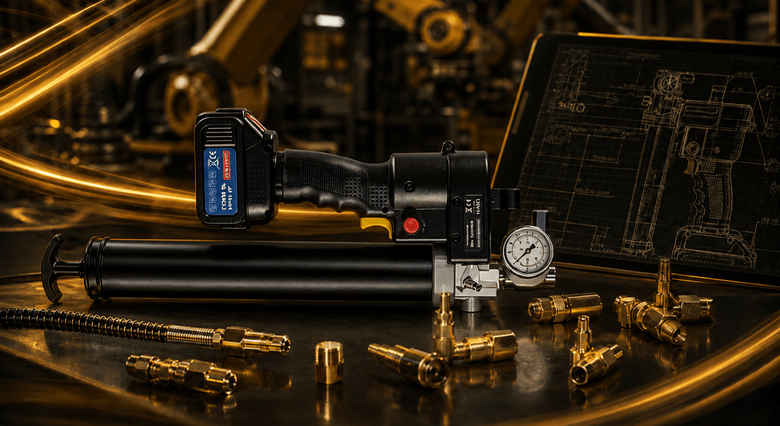
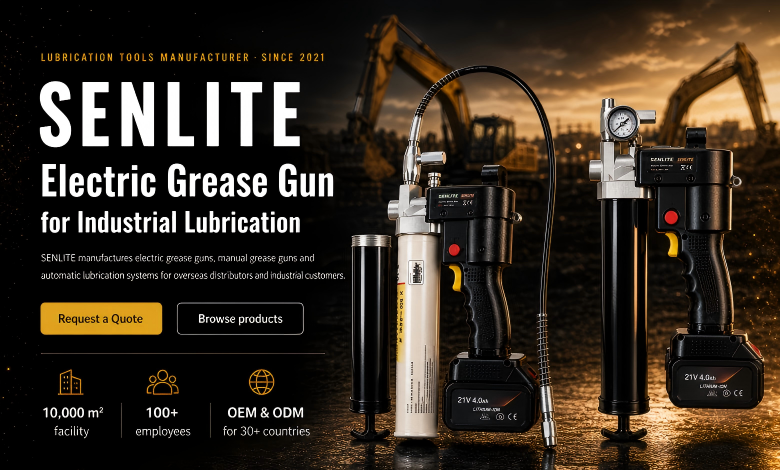
An electric grease gun with a pressure gauge allows operators to monitor pressure conditions during lubrication. It provides useful information about resistance in the grease delivery system and can help identify unusual pressure changes when servicing heavy equipment.
However, a pressure gauge does not measure the amount of grease delivered, and a high pressure reading does not automatically mean that a bearing or lubrication point has received enough grease.
For professional users, understanding what a grease gun pressure gauge actually measures is essential for safe and effective maintenance.
This guide explains how pressure gauges work on electric grease guns, how to interpret common readings, when pressure monitoring is useful, and what buyers should consider when selecting a cordless grease gun with an integrated pressure gauge.
What Does a Pressure Gauge on an Electric Grease Gun Do?
A pressure gauge displays the pressure at the point where it is installed in the grease delivery system.
When an electric grease gun operates, its motor drives a pumping mechanism that moves grease from the barrel through the outlet and high-pressure hose toward the grease fitting.
The pressure gauge provides a visible indication of the pressure developed in that system.
This can help operators:
Monitor pressure changes during lubrication.
Identify unusual resistance in the grease delivery path.
Observe whether pressure increases when a fitting becomes difficult to lubricate.
Understand the operating conditions of the grease gun.
Improve pressure awareness during equipment maintenance.
For heavy equipment maintenance, this information can be useful because different lubrication points may have different resistance conditions.
A pressure gauge provides additional operating information that an operator cannot obtain simply by listening to the motor.
Pressure, Flow Rate and Grease Quantity Are Three Different Things
One of the most important points when evaluating an electric grease gun is understanding the difference between pressure, flow rate and grease quantity.
These three measurements describe different aspects of lubrication performance.
1. Pressure (PSI)
PSI means pounds per square inch.
It measures the pressure developed within the grease delivery system.
A higher pressure capability can help a grease gun overcome greater resistance in a lubrication path, provided the equipment and all connected components are rated for the application.
However, maximum pressure is not the same as the pressure required for every lubrication point.
2. Grease Flow Rate (g/min)
Flow rate describes how much grease can be delivered over a period of time.
It is commonly expressed in grams per minute.
For maintenance teams servicing multiple machines, grease output can influence how efficiently routine lubrication work is completed.
3. Grease Quantity
Grease quantity refers to the actual amount of lubricant delivered to a bearing, joint or lubrication point.
A pressure gauge does not directly measure this quantity.
Operators should follow the equipment manufacturer's lubrication instructions to determine the required amount of grease.
In simple terms:
PSI tells you about pressure.
g/min tells you about grease delivery rate.
Grease quantity tells you how much lubricant has actually been applied.
A professional electric grease gun should be evaluated using all three concepts rather than relying on one specification.
How to Read a Grease Gun Pressure Gauge
A pressure gauge becomes more useful when operators understand how pressure changes during normal lubrication.
There is no single universal pressure reading that is correct for every machine. The actual reading depends on the grease, temperature, hose, coupler, fitting, lubrication passage and equipment requirements.
The following situations provide general guidance.
1. Pressure Increases While Grease Is Flowing
When grease is moving through a lubrication system, pressure may change as the grease encounters resistance.
A gradual pressure increase does not necessarily indicate a problem.
Operators should observe whether grease continues to enter the lubrication point and whether the pressure remains within the permitted operating limits.
2. Pressure Rises Quickly but Grease Flow Stops
This condition deserves attention.
Possible causes include:
A blocked grease fitting.
Hardened grease inside the lubrication passage.
Excessive resistance in the bearing or joint.
A restricted hose or coupler.
An incorrect or damaged connection.
Do not continue operating the gun simply to force the pressure higher.
Stop and inspect the lubrication system according to the equipment and grease gun manufacturer's instructions.
3. The Motor Runs but the Gauge Shows Little Pressure
This may indicate that the pumping system is not developing normal pressure.
Possible causes include:
Air trapped in the pump after cartridge replacement.
Insufficient grease supply.
Incorrect grease loading.
Loss of prime.
Internal pump or valve problems.
A damaged or inaccurate gauge.
Check grease supply and priming first before assuming that the motor has failed.
4. Pressure Readings Fluctuate
Fluctuating readings may occur because of changes in pumping conditions, grease supply, air in the system or resistance at the lubrication point.
The operator should compare the readings with the tool's normal operating behavior and inspect the system if the fluctuations are unusual.
A pressure gauge is an observation tool, not a complete fault-diagnosis system.
What a Grease Gun Pressure Gauge Cannot Tell You
Although a pressure gauge is useful, it is important to understand its limitations.
A gauge cannot independently confirm:
Whether the bearing has received enough grease
Pressure does not equal grease quantity. The correct lubrication amount must be determined using the equipment manufacturer's maintenance requirements.
Whether the grease is suitable
A pressure reading cannot identify grease grade, thickener compatibility or lubricant contamination.
Whether a lubrication point is completely clean
High pressure does not prove that hardened grease or contamination has been removed.
Whether a component is operating safely
The equipment manufacturer's pressure limits and lubrication instructions must always be followed.
The exact pressure at every point in the system
The gauge measures pressure at its installation location. Pressure conditions may differ elsewhere in the hose, coupler, fitting and lubrication passage.
For these reasons, pressure monitoring should be combined with correct lubrication procedures and regular equipment inspection.
Why Pressure Monitoring Matters for Heavy Equipment
Heavy equipment often operates under demanding conditions.
Excavators, loaders, mining machinery, agricultural equipment and industrial machines contain numerous lubrication points that require regular maintenance.
Common lubrication locations include:
Excavator boom pins.
Bucket linkage joints.
Arm and cylinder connection points.
Loader pivot points.
Bearings and bushings.
Agricultural machinery joints.
Industrial equipment moving components.
Some lubrication points may become more difficult to service because of contamination, hardened grease, damaged fittings or restricted lubrication passages.
A pressure gauge can help maintenance personnel observe changes during lubrication and recognize situations that require further inspection.
For fleet maintenance teams, this can also support more consistent operating procedures and operator training.
However, pressure monitoring must never replace the equipment manufacturer's specified lubrication procedure.
Pressure Ratings: What Should Buyers Check?
When purchasing an electric grease gun with a pressure gauge, buyers should examine the complete pressure system rather than focusing only on the maximum PSI displayed in marketing materials.
Important specifications include:
Maximum Working Pressure
This indicates the maximum pressure capability specified for the grease gun.
It should not be treated as the normal operating target for every lubrication point.
Hose Pressure Rating
The high-pressure hose must be suitable for the grease gun's intended operating conditions.
Buyers should check the hose's specified working pressure and compatibility with the tool.
Coupler and Connection Rating
The coupler and connecting components must also be suitable for the intended pressure.
A high-pressure grease gun should not be connected to an accessory simply because its thread appears to fit.
Pressure Relief Protection
A suitable pressure protection system helps manage abnormal pressure conditions.
Operators should understand the function and limitations of the relief mechanism and follow the manufacturer's instructions.
Gauge Range and Readability
The gauge should provide a suitable measurement range and be readable under actual working conditions.
Its measurement range should be appropriate for the intended tool and application.
One important distinction is the difference between working pressure and burst pressure. A component's burst rating must never be treated as its permitted continuous working pressure.
How to Use an Electric Grease Gun with a Pressure Gauge
The following general procedure helps operators use pressure monitoring more effectively.
Step 1: Check the equipment lubrication requirements
Confirm the correct grease type, lubrication points and pressure limitations specified by the equipment manufacturer.
Step 2: Inspect the grease gun
Check the barrel, battery, hose, coupler, connections and pressure gauge before operation.
Do not use a grease gun with a damaged hose, leaking connection or defective pressure gauge.
Step 3: Confirm the grease supply
Make sure the cartridge or bulk grease has been loaded correctly.
If necessary, prime the grease gun according to the manufacturer's instructions.
Step 4: Connect the coupler correctly
Clean the grease fitting and attach the coupler securely.
A poor connection can cause grease leakage and unreliable lubrication.
Step 5: Operate while observing the gauge
Apply grease according to the equipment manufacturer's procedure.
Observe pressure changes and pay attention to whether grease continues to flow normally.
Step 6: Stop if abnormal pressure develops
If pressure rises sharply, grease stops flowing or a hose or connection shows signs of leakage, stop operation.
Do not attempt to solve a blockage simply by increasing pressure.
Step 7: Release pressure safely
Before disconnecting or servicing the grease gun, follow the manufacturer's pressure-release procedure.
Never loosen a pressurized hose or connection.
High-pressure grease injection injuries can be extremely serious even when the initial wound appears small. Seek immediate professional medical treatment if an injection injury occurs.
Electric Grease Gun with Pressure Gauge vs. Standard Electric Grease Gun
Both types are designed to deliver grease to lubrication points, but they provide different levels of pressure visibility.
ComparisonStandard Electric Grease GunElectric Grease Gun with Pressure GaugeElectric pumpingYesYesGrease deliveryYesYesVisible pressure readingDepends on configurationIntegrated gaugePressure observationLimited without a gaugeEasier during operationOperator feedbackMainly based on operation and grease deliveryIncludes visible pressure informationSuitable applicationsGeneral equipment lubricationApplications where pressure monitoring is useful
A pressure gauge is an additional monitoring feature. It does not automatically make a grease gun more powerful or guarantee better lubrication.
Buyers should evaluate the complete product configuration, pressure performance, grease output, battery system and safety features.
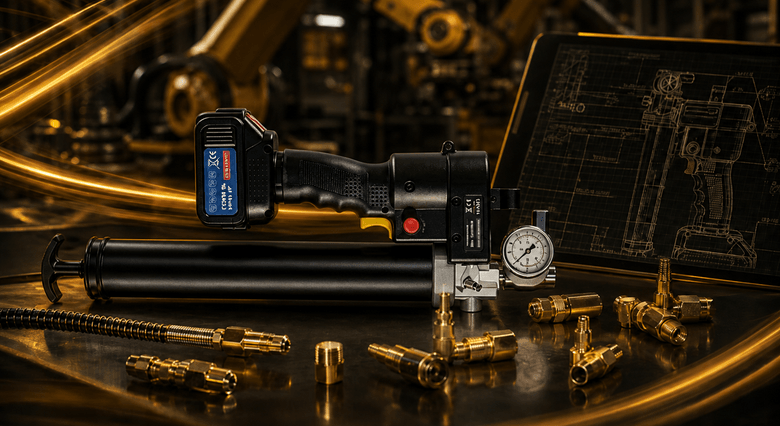
SENLITE SLT2400-Y: A 24V Electric Grease Gun with Pressure Gauge
Dezhou Senlite Electromechanical Equipment Co., Ltd. manufactures SENLITE electric grease guns for professional lubrication applications.
For buyers looking for an electric grease gun with visible pressure monitoring, the SENLITE SLT2400-Y is a 24V cordless model equipped with an integrated pressure gauge.
Its confirmed product specifications include:
Model: SLT2400-Y
Rated voltage: 24V
Maximum working pressure: up to 10,000 PSI
Grease output: up to 130 g/min
Grease capacity: 400 cc / 14 oz
Integrated pressure gauge
Adjustable pressure control
Safety pressure-relief protection
The model is designed for professional maintenance applications involving construction machinery, vehicles and industrial equipment.
The integrated pressure gauge provides operators with visible pressure information during lubrication.
For distributors and importers, the SLT2400-Y offers an additional configuration to consider when customers specifically request pressure monitoring.
The appropriate product should always be selected according to the actual lubrication requirements of the target equipment.
What Should Distributors Check Before Purchasing?
For distributors, wholesalers and OEM buyers, evaluating a grease gun with a pressure gauge involves more than checking its appearance.
Consider the following questions:
What is the maximum working pressure?
Is the pressure gauge integrated into the product?
Is the gauge suitable for the specified pressure range?
What is the maximum grease output?
What grease capacity does the barrel support?
What pressure rating does the hose have?
Are the coupler and fittings compatible with the target market?
Does the tool include appropriate pressure protection?
Are spare parts and after-sales support available?
Can the manufacturer provide OEM branding and packaging?
For OEM projects, buyers should also confirm the required battery configuration, packaging, labeling, accessory options and target-market specifications before placing a bulk order.
Frequently Asked Questions
What is the purpose of a pressure gauge on an electric grease gun?
A pressure gauge displays pressure at its installation point in the grease delivery system. It helps operators observe pressure changes during lubrication and identify unusual resistance conditions.
Does a higher pressure reading mean better lubrication?
No. A higher reading does not automatically mean better lubrication. It may indicate greater resistance or a restriction in the grease delivery system. The correct pressure depends on the equipment manufacturer's requirements.
Does
Related products
Related articles
Electric Grease Gun vs Automatic Lubrication System: Which Is Better for Heavy Equipment?
Compare electric grease guns with automatic lubrication systems for heavy equipment. Learn about cost, maintenance, flexibility, lubrication control, and how to choose the right solution.
Will Any 14 oz Grease Cartridge Fit an Electric Grease Gun?
Learn how to check 14 oz grease cartridge compatibility, barrel dimensions, loading methods, and grease specifications before using an electric grease gun.
Grease Gun Coupler Types Explained: How to Choose the Right One for Heavy Equipment
Learn how to choose the right grease gun coupler for heavy equipment. Compare standard, locking, button-head and flush couplers, with tips on fitting compatibility, pressure ratings and safe use.